
TOwCmtFIEL(1)

Biological 3D printing technology for bone regeneration using nanofiber-coated tubular scaffolds

Researchers from Mexico and Costa Rica are working together to advance bone regeneration through bio-3D printing, enabling doctors and surgeons to create patient-specific scaffolds to improve treatment outcomes. For scientists, 3D printing and tissue engineering hold tremendous promise because they offer the ability to precisely fabricate complex geometries. In these experiments, all the classical advantages of 3D printing are also demonstrated, such as affordability, production speed, and optimized performance.

The research team further detailed their findings in the study “Biocompatibility of 3D-Printed Tubular Scaffolds with Nanofibrous Coatings for Bone Applications,” explaining how bone scaffolds can be enhanced by adding composite layers that create surfaces more conducive to cell adhesion and uniform cell seeding. To fabricate these scaffolds, the team employed a unique Air-Jet Spinning (AJS) technique featuring specialized spinning nozzles and a surface for collecting polymer fibers and compressed gas. They also used 3D-printed PLA tubular scaffolds with submicron-fiber surface coatings to evaluate the biological response of human fetal osteoblast cells (hFOB).

This new approach combines a PLA 3D-printed core with an outer layer of nanofibers. The researchers used Cura software for internal geometry slicing and a MakerMex 3D printer to produce the tubular structures. The dual-technology method allowed the team to generate fiber-layer dispersions that formed surfaces with a “uniform thickness distribution,” and the nanofibers integrated well with the 3D-printed scaffold. Adhesion was described as “very strong,” the composites demonstrated increased thermal stability, and the coating endowed the tubular scaffold with properties essential for tissue engineering in bone regeneration.

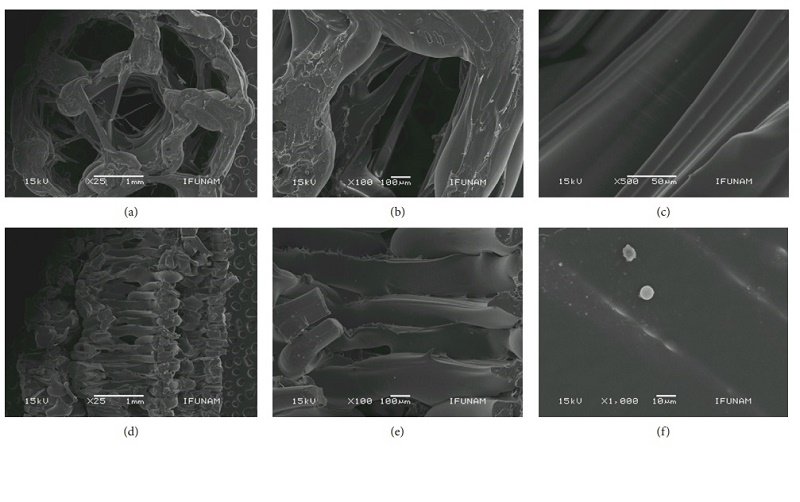
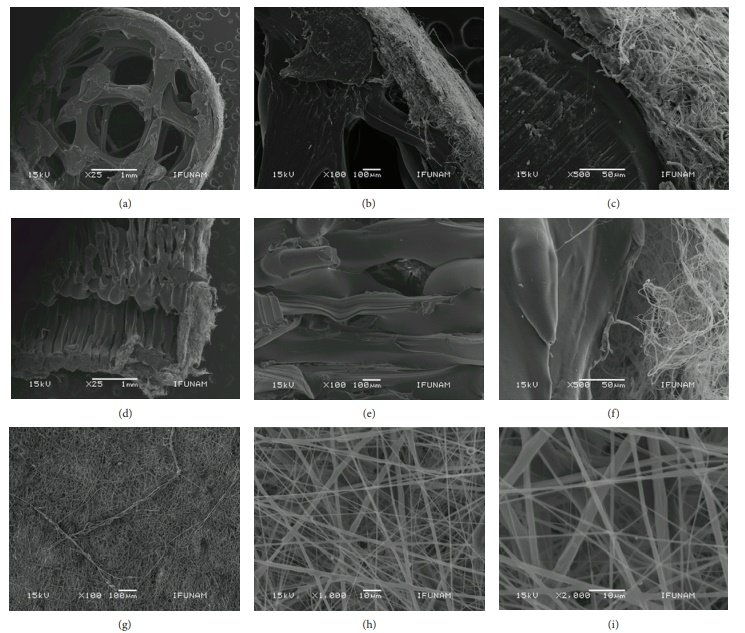
SEM Micrographs of the 3D-Printed Tubular Scaffold

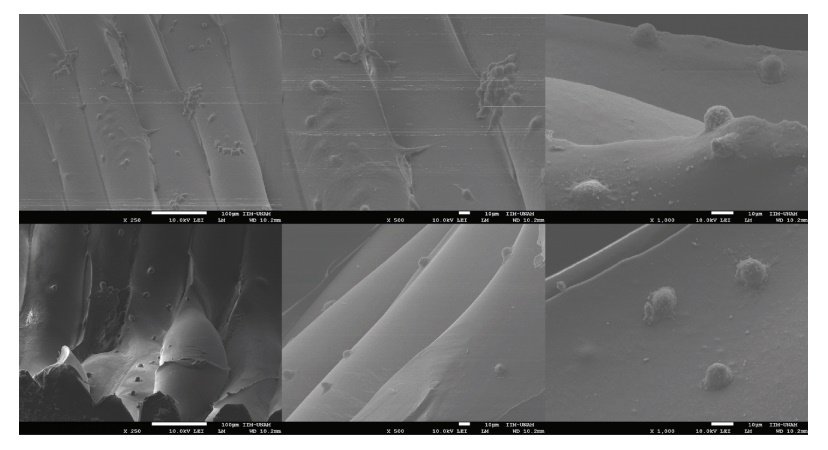
SEM analysis of the printed tubular scaffold’s 3D surface revealed distinctive morphology and structure, and the surface roughness increased after functionalization with the fiber membrane. Additionally, scaffolds coated with submicron fibers exhibited significantly better hFOB cell adhesion and proliferation compared to uncoated 3D-printed scaffolds. This indicates that the fibers serve as a platform to improve cellular biocompatibility (non-cytotoxicity) and support the attachment and growth of osteoblast cells. The researchers stated that further investigation of the fiber-coated scaffolds is needed to explore their potential role in biomineralization processes and possible future applications in bone tissue engineering or vascularization.

Optical Profilometry Results

Optical profilometry images show the morphology of the 3D-printed tubular scaffolds:

(a) an uncoated scaffold with a smooth surface, and (b) a coated scaffold where surface roughness is significantly increased by the presence of nanofibers.

The field of bone regeneration remains full of challenges, yet doctors and surgeons continue striving to improve surgical techniques and implantable devices in order to enhance the quality of life for patients who may be suffering from debilitating or painful conditions. Over the years, researchers have conducted numerous studies involving 3D printing, producing devices such as implants tailored for Chinese patients, cryogenically fabricated bone scaffolds, and a variety of other scaffold platforms for bone regeneration.

SEM micrograph of a 3D printed tubular scaffold coated with 7% PLA nanofibers.

*This article originally appeared on China 3D Printing Network. China 3D Printing Network is the original author of this piece.

Have parts to make? Get free instant quote today.

Share the Post:

Related Posts

Knowledge Base
Stainless Steel 304: Comprehensive Analysis of Performance, Applications, and Selection Guide

Step into a modern kitchen, open a refrigerator, walk into an office building elevator, or observe medical equipment—in these seemingly different scenarios, one material silently underpins our lives: Stainless Steel 304. As the most common and widely used grade of austenitic stainless steel, SS304 has become an “invisible champion” in industrial manufacturing and daily life, thanks to its excellent corrosion resistance, good formability, and outstanding hygienic properties.
Since stainless steel was invented in the early 20th century, 304 stainless steel has evolved into the world’s most popular stainless steel variety, accounting for approximately 50% of the stainless steel market share. From aerospace to food processing, from architectural decoration to medical devices, this alloy occupies an irreplaceable position in modern materials science due to its unique combination of properties. This article will provide a comprehensive analysis of the chemical composition, mechanical properties, application fields, processing techniques, and selection guidelines for 304 stainless steel, offering a thorough reference for engineers, designers, purchasers, and general consumers.

Read More

Join our newsletter to stay updated

Scroll to Top