

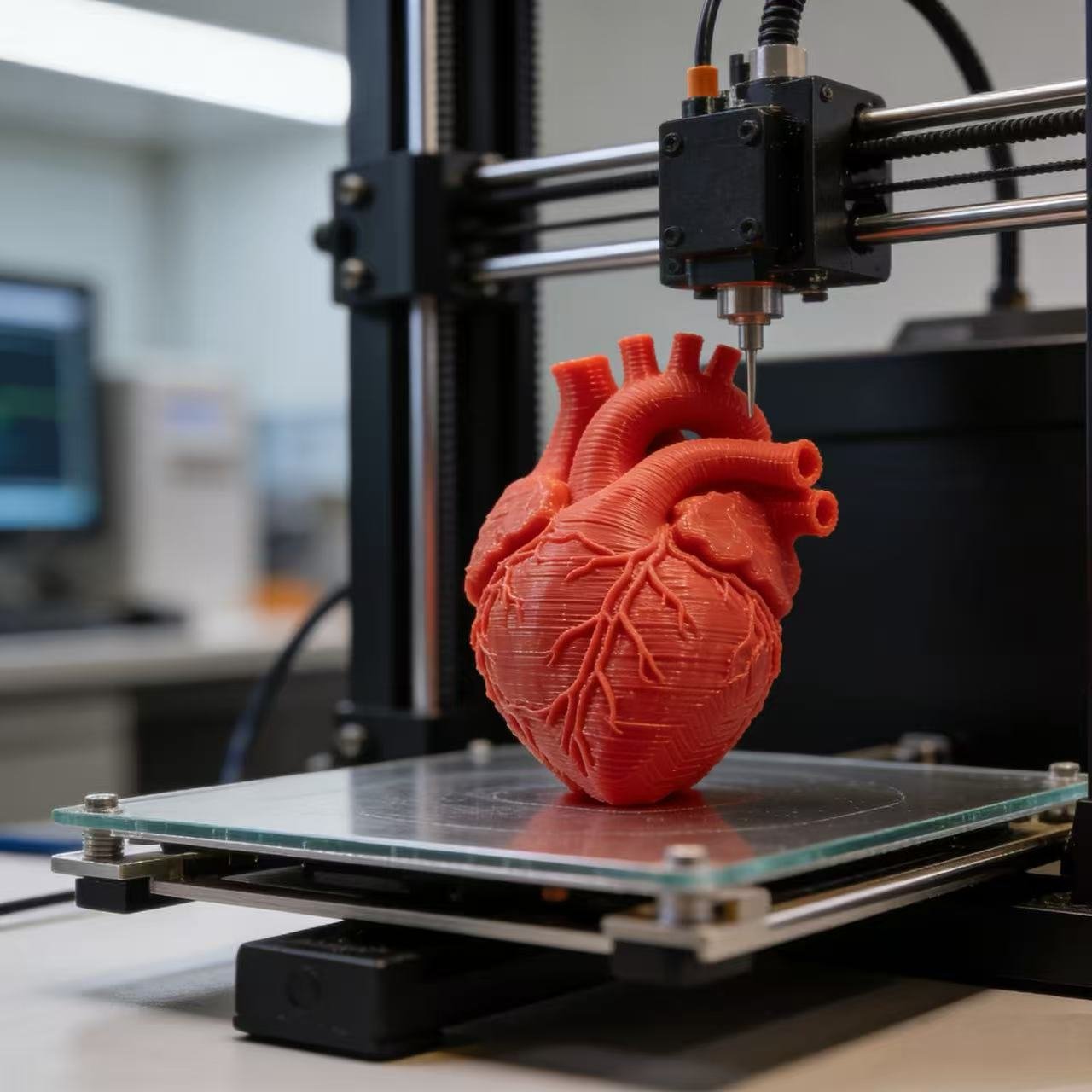
In the high-stakes world of pediatric cardiology, surgeons often operate with limited information, navigating tiny, complex, and uniquely malformed hearts. For one family in the United States, this uncertainty turned to hope thanks to an innovative tool: a precise, tangible 3D-printed model of their infant’s heart.
The Challenge: A Complex and Fragile Heart
Baby Mia (name changed for privacy) was born with a rare and severe congenital heart defect known as double outlet right ventricle with a subaortic ventricular septal defect. In simpler terms, the major blood vessels were connected to the wrong chambers of her heart, and there was a hole in the wall between them. This condition prevented her body from receiving enough oxygenated blood. Traditional imaging like MRI and CT scans provided 2D slices on a screen, but it was incredibly difficult for the surgical team at Boston Children’s Hospital to fully understand the intricate three-dimensional spatial relationships of the malformed structures. Planning the corrective surgery felt like navigating a maze blindfolded.
The Innovative Solution: From Digital Scan to Physical Model
To overcome this challenge, Mia’s medical team turned to 3D printing. Here’s how they did it:
- High-Resolution Imaging: First, Mia underwent a cardiac CT scan, which captured hundreds of cross-sectional images of her tiny heart.
- Digital Reconstruction: Using specialized software, bioengineers converted the 2D CT scan data into a highly accurate 3D digital model. They meticulously segmented the data, isolating the heart chambers, vessels, and defects.
- 3D Printing: The digital file was sent to a multi-material, full-color 3D printer. The printer used a flexible, photopolymer resin to create a physical replica of Mia’s heart. Crucially, different colors and materials were used to distinguish between muscular tissue, arteries, and veins, and to highlight the critical defects.
The Outcome: A Surgical Revolution in the Palm of Their Hands The impact was immediate and profound.
- Enhanced Surgical Planning: Holding the life-size model, surgeons Dr. Sitaram Emani and his team could examine the heart’s anatomy from every angle. They could physically trace the path of blood flow, measure exact distances, and identify potential obstacles. “The model told us exactly where we should go and, more importantly, where we should not go,” said Dr. Emani.
- Procedure Rehearsal: The flexible model allowed them to simulate the surgery beforehand. They practiced cutting and suturing on the replica, refining their approach and anticipating complications. This rehearsal reduced the element of surprise in the actual operating room.
- Improved Communication: The tangible model became an invaluable tool for communicating with Mia’s anxious parents, helping them visualize their daughter’s condition and understand the planned procedure.
- Successful Operation: Armed with unprecedented pre-operative insight, the surgical team performed the complex, seven-hour operation with greater confidence and precision. The surgery was a success. Mia’s circulation was corrected, and she recovered steadily, eventually going home to live a healthy life.
Why This Case Matters for the Future of 3D Printing
This case is not an isolated incident but part of a rapidly growing trend. It highlights key advantages of 3D printing in medicine:
- Personalization: Every patient is unique, and 3D printing enables the creation of patient-specific models, implants, and even surgical guides.
- Risk Reduction: By allowing for pre-operative planning and rehearsal, 3D printing reduces surgery time, time under anesthesia, and the risk of errors.
- Education & Training: These models are revolutionizing the training of new surgeons, providing them with realistic, hands-on experience without risk.
- Future Applications: The technology is expanding beyond models to include 3D-printed biocompatible implants (like cranial plates or hip joints), bioprinted tissues, and customized surgical instruments.
Conclusion
Baby Mia’s story is a powerful testament to how 3D printing is moving beyond prototyping and into the core of life-saving applications. It bridges the gap between digital data and the physical world, giving doctors a new kind of clarity and control. As the technology becomes more accessible and materials more advanced, 3D bioprinting promises to further blur the line between technology and biology, ushering in a new era of personalized, precision medicine.
*Inspired by real cases from leading institutions like Boston Children’s Hospital and the Mayo Clinic. Learn more about their 3D printing programs on their official websites.