International womens day png background_6002282

A playground constructed using 3D concrete printing technology.

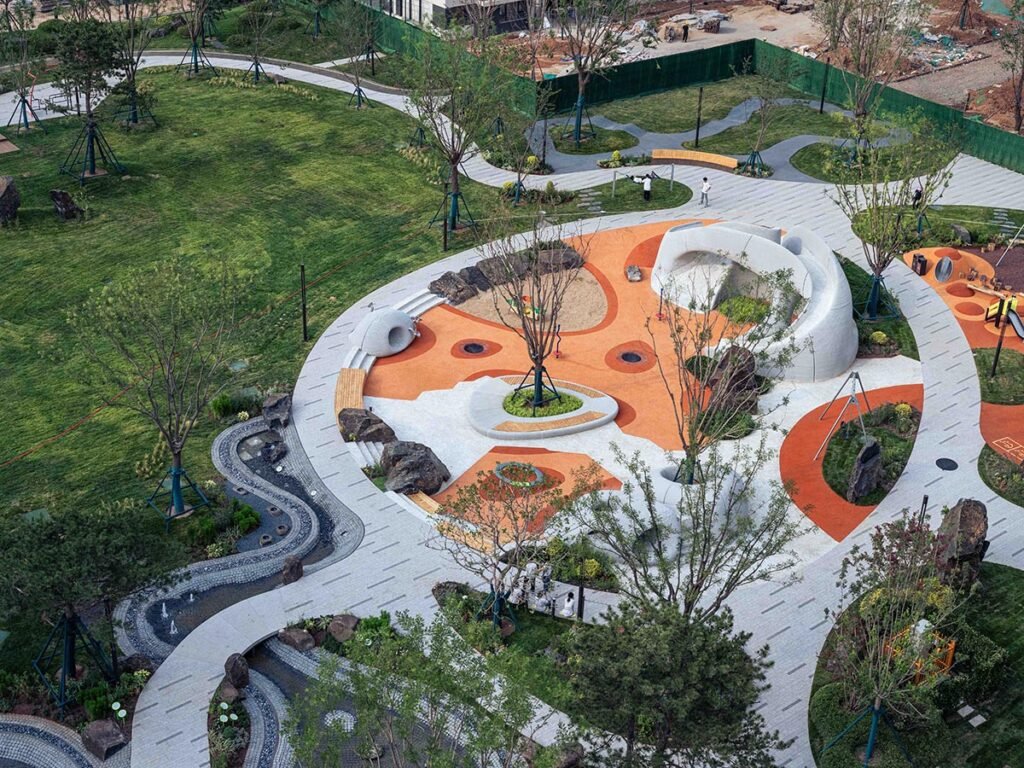
XISUI Design has completed Boulder Park, a 13,000-square-meter community playground in Ji’nan, Shandong Province, China, that incorporates 3D concrete printing technology. The park features natural boulders combined with 3D-printed concrete structures to create play areas, including a rock cave adventure zone built using additive manufacturing techniques.

The park is divided into five sections: Boulder Playground for All Ages, Flower Garden, Forest Garden, Water Garden, and Stone Garden. The design integrates traditional playground equipment like swings, slides, and climbing structures with water play features including fountains, streams, and interactive water elements. XISUI Design focused on creating spaces that accommodate multiple age groups and encourage interaction with natural elements.

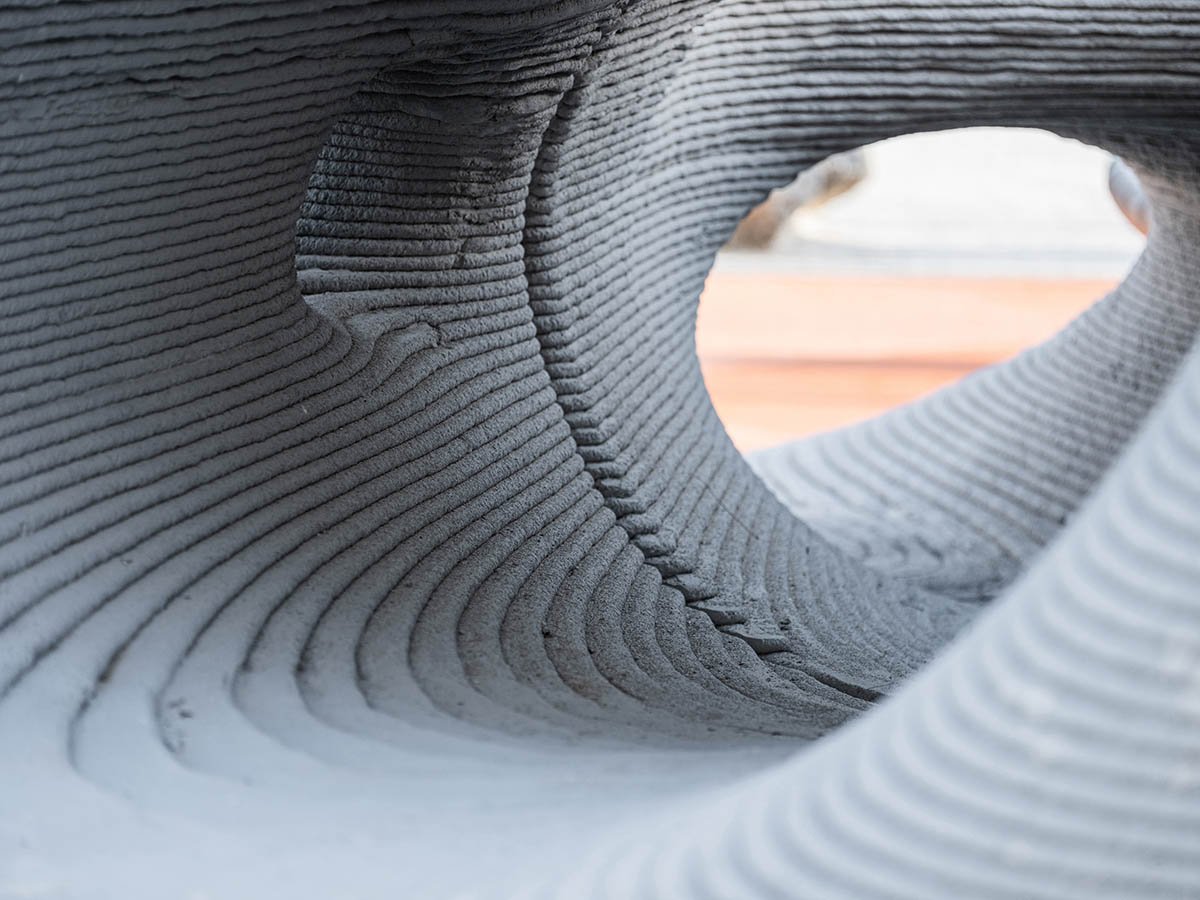
The 3D concrete printing process uses computer-controlled robotic arms to extrude concrete in layers, creating complex curved forms that would be difficult to achieve with traditional construction methods. The layered printing technique produces surface textures that visually resemble natural rock formations. All printed structures feature rounded corners and smooth edges to meet safety requirements for children’s play areas.

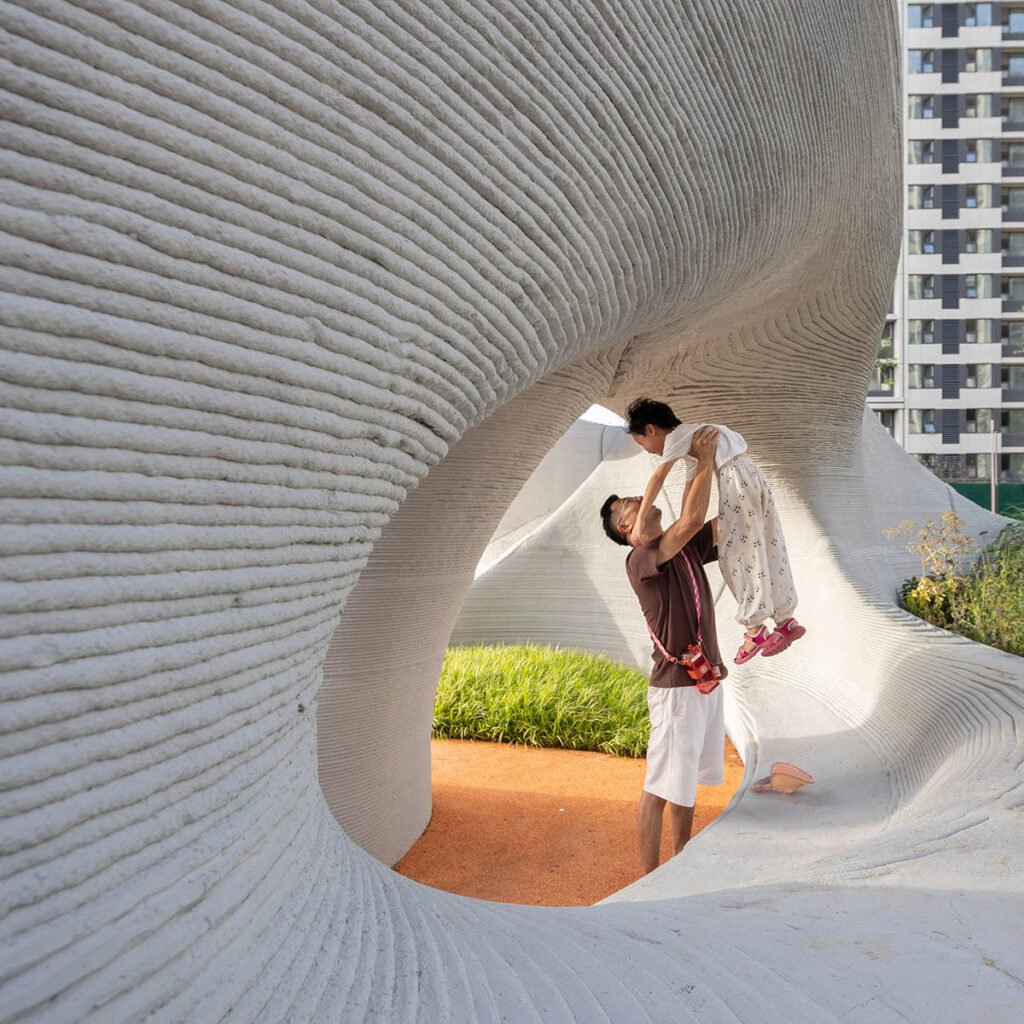
The bottom area forms a shade and seating area. Photography © Zhou Sheng

“Landscape structures and installations are often small in scale, with low load requirements and simple, clear functional needs. In the application of 3D-printed concrete technology, compared to architecture, landscape projects may have even more diverse usage scenarios,” explained Hu Yihao, Lead Designer. The 3D printing materials used in Boulder Park have an average strength of 50MPA, which exceeds traditional C40 concrete strength standards according to Yihao.

The project demonstrates the application of 3D concrete printing in landscape architecture, where the technology’s ability to create organic shapes and reduce labor costs makes it suitable for outdoor installations. Boulder Park serves as a case study for integrating digital manufacturing techniques with traditional landscape design elements in public spaces.

*Source: worldarchitecture.org

Have parts to make? Get free instant quote today.

Share the Post:

Related Posts

Knowledge Base
Stainless Steel 304: Comprehensive Analysis of Performance, Applications, and Selection Guide

Step into a modern kitchen, open a refrigerator, walk into an office building elevator, or observe medical equipment—in these seemingly different scenarios, one material silently underpins our lives: Stainless Steel 304. As the most common and widely used grade of austenitic stainless steel, SS304 has become an “invisible champion” in industrial manufacturing and daily life, thanks to its excellent corrosion resistance, good formability, and outstanding hygienic properties.
Since stainless steel was invented in the early 20th century, 304 stainless steel has evolved into the world’s most popular stainless steel variety, accounting for approximately 50% of the stainless steel market share. From aerospace to food processing, from architectural decoration to medical devices, this alloy occupies an irreplaceable position in modern materials science due to its unique combination of properties. This article will provide a comprehensive analysis of the chemical composition, mechanical properties, application fields, processing techniques, and selection guidelines for 304 stainless steel, offering a thorough reference for engineers, designers, purchasers, and general consumers.


Read More

Join our newsletter to stay updated

Scroll to Top