💰Spring Renewal & Women’s Day Promotion – 8% OFF Limited Time
🌸With the arrival of spring, our company has officially resumed full operation and production capacity after the Spring Festival holiday. We sincerely thank all customers for your patience and support.
To honor International Women’s Day and thank you for your trust, we are launching a limited-time special promotion:
⏰ Promotion Time March 5 – March 31
🎯 Exclusive Discount 8% OFF Coupon for all orders placed during the valid period.
💡 Warm Tips Place your order early to enjoy priority production and guaranteed delivery time.
This event is dedicated to celebrating the power of women worldwide and thanking you for your continued partnership.
For any inquiries, please contact our sales team.
Thank you for choosing us, and let’s move forward to a prosperous new year together!
Artec 3D, a Luxembourg-based developer of professional 3D scanners and software, has introduced Artec Studio Lite, a streamlined version of its flagship 3D data-processing platform. The new software integrates AI-powered photogrammetry with core 3D editing and analysis capabilities, offering a more accessible option for designers, educators, and small businesses. Artec Studio Lite will debut at Formnext 2025 in Frankfurt, with licenses available from November 18 through the company’s website.
Artec Studio Pro has long served as a benchmark in professional 3D scanning, supporting reverse engineering, inspection, and model preparation across manufacturing, healthcare, and cultural heritage applications. Artec Studio Lite inherits much of this professional toolset while simplifying the workflow for users working exclusively with photos and videos. It allows accurate 3D model generation without dedicated scanning hardware, extending advanced capture capabilities beyond industrial settings.
The company says its AI-powered photogrammetry merges the precision of structured-light scanning with the flexibility of image-based modeling. The hybrid approach delivers professional-grade accuracy from standard cameras or mobile devices, broadening access to digital-reality tools across research, manufacturing, and creative disciplines.
Photogrammetry data capture using a standard camera as part of Artec Studio Lite’s AI-powered workflow. Image via Artec 3D.
AI photogrammetry and enhanced functionality
“With AI Photogrammetry, we’ve rolled out a game-changing feature for creating exceptionally lifelike 3D models. Now, with Artec Studio Lite, we’re taking this technology even further and making it accessible to a wider audience,” said Art Yukhin, President and CEO of Artec 3D. “We’re also very excited to see what makers and engineers across industries can do with our all-in-one, reimagined solution, Artec Studio Pro.”
The new software includes essential capabilities for mesh editing, model preparation, and measurement analysis while streamlining reconstruction through AI-driven algorithms. It reproduces fine geometric details with high fidelity, often outperforming low-cost scanners and comparable photogrammetry software. Even with limited imagery, the system produces accurate, visually detailed models of dark, shiny, translucent, or featureless surfaces that typically challenge other approaches
Feature highlights include multi-camera compatibility for merging images or videos from different devices such as drones, automated image prioritization for texture sharpness, and algorithms that remove artifacts from turntable or handheld captures. Automated workflows enable one-click model generation, while integrated scale bars achieve sub-millimeter accuracy for real-world measurement and CAD deviation analysis. Users can export results in multiple formats for 3D printing or use within third-party applications.
“As our slogan says, ‘The power is in the software,’” added Yukhin. “Artec Studio Lite is a self-sufficient, powerful solution for anyone who needs accurate digital twins. Whether for science, education, heritage preservation, forensics, CGI, or e-commerce, all you need is a camera, smartphone, drone, or even a microscope, together with Artec Studio Lite, to create ultra-realistic 3D models.”
Launch and availability
Artec 3D will unveil Artec Studio Lite at Formnext 2025 in Frankfurt, Germany, from November 18 to 21. Visitors to Booth E09 in Hall 12.1 can test the new software and participate in live demonstrations. Artec 3D also plans to distribute free licenses to selected early users during the event. Subscription plans will include monthly and annual options for both non-commercial and professional users. Pricing information has not been disclosed, though Artec 3D indicates Lite will serve as a more affordable entry point within its software lineup.
*This article originally appeared on 3D Printing Industry. ANYER TENORIO LARA is the original author of this piece.
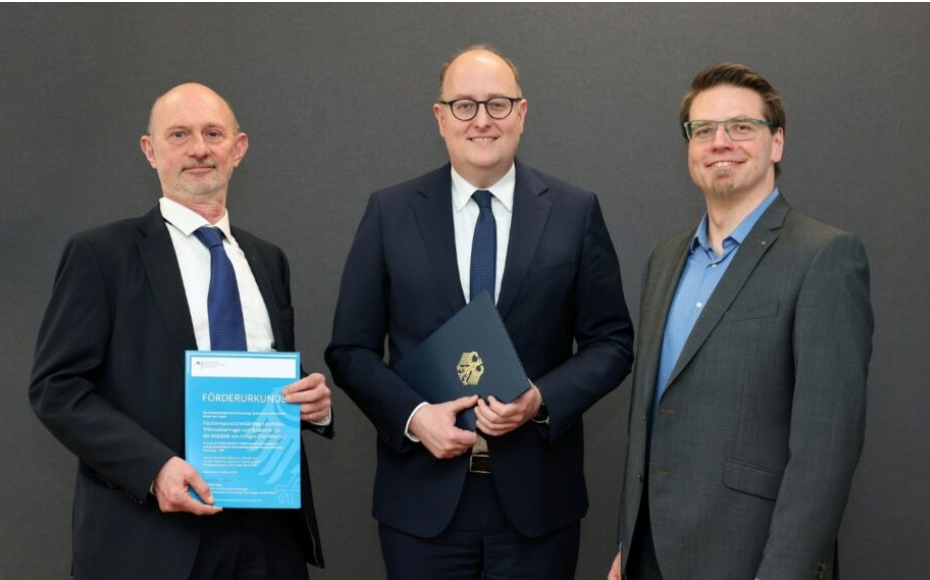
The Aachen-based Fraunhofer Institute for Laser Technology (Fraunhofer ILT) is to research titanium aluminide hydrogen reactors and heat exchangers. The
Step into a modern kitchen, open a refrigerator, walk into an office building elevator, or observe medical equipment—in these seemingly different scenarios, one material silently underpins our lives: Stainless Steel 304. As the most common and widely used grade of austenitic stainless steel, SS304 has become an “invisible champion” in industrial manufacturing and daily life, thanks to its excellent corrosion resistance, good formability, and outstanding hygienic properties.
Since stainless steel was invented in the early 20th century, 304 stainless steel has evolved into the world’s most popular stainless steel variety, accounting for approximately 50% of the stainless steel market share. From aerospace to food processing, from architectural decoration to medical devices, this alloy occupies an irreplaceable position in modern materials science due to its unique combination of properties. This article will provide a comprehensive analysis of the chemical composition, mechanical properties, application fields, processing techniques, and selection guidelines for 304 stainless steel, offering a thorough reference for engineers, designers, purchasers, and general consumers.
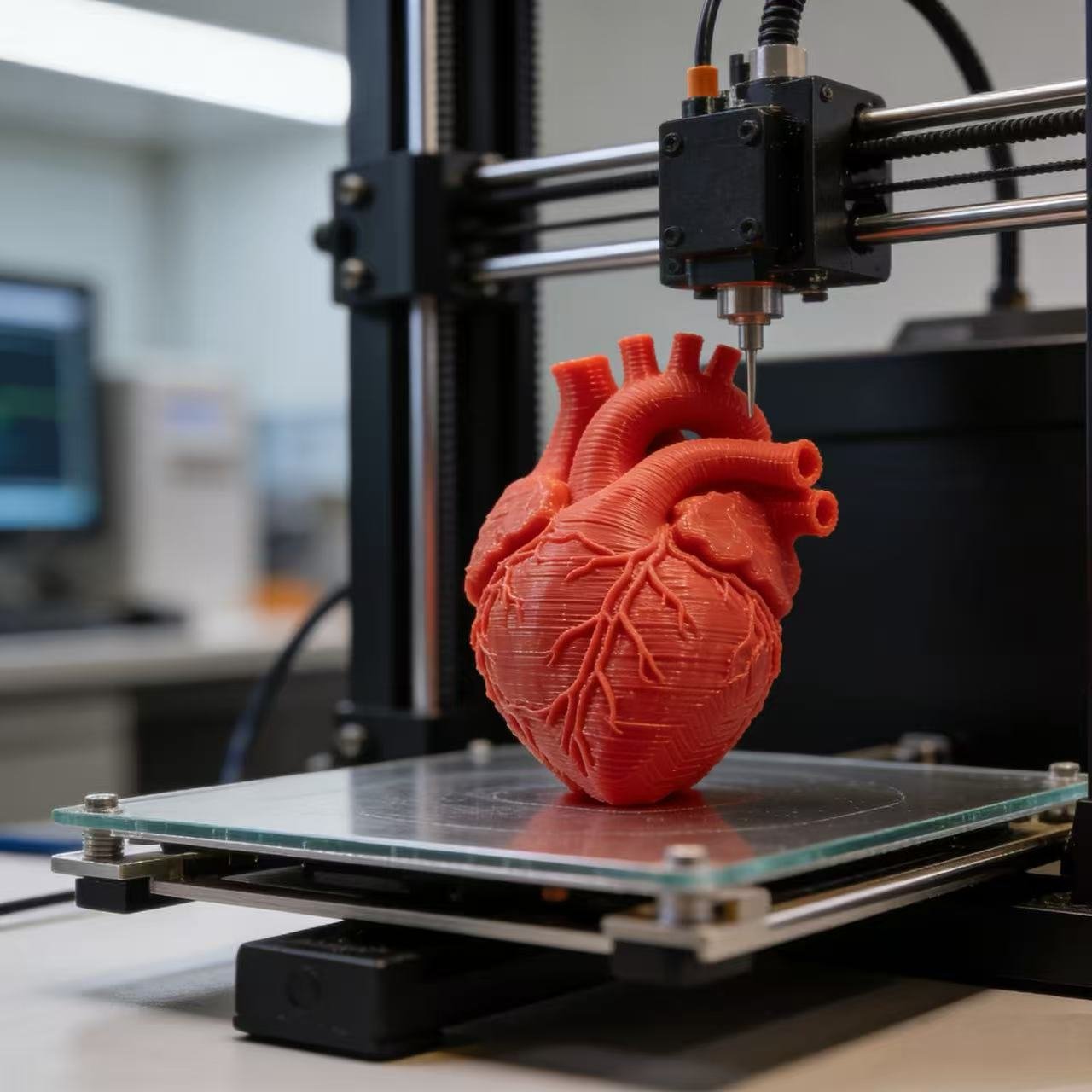
In the high-stakes world of pediatric cardiology, surgeons often operate with limited information, navigating tiny, complex, and uniquely malformed hearts.