TOwCmtFIEL(1)

3D Printing Powers Automotive Lightweighting: A New Era in Manufacturing

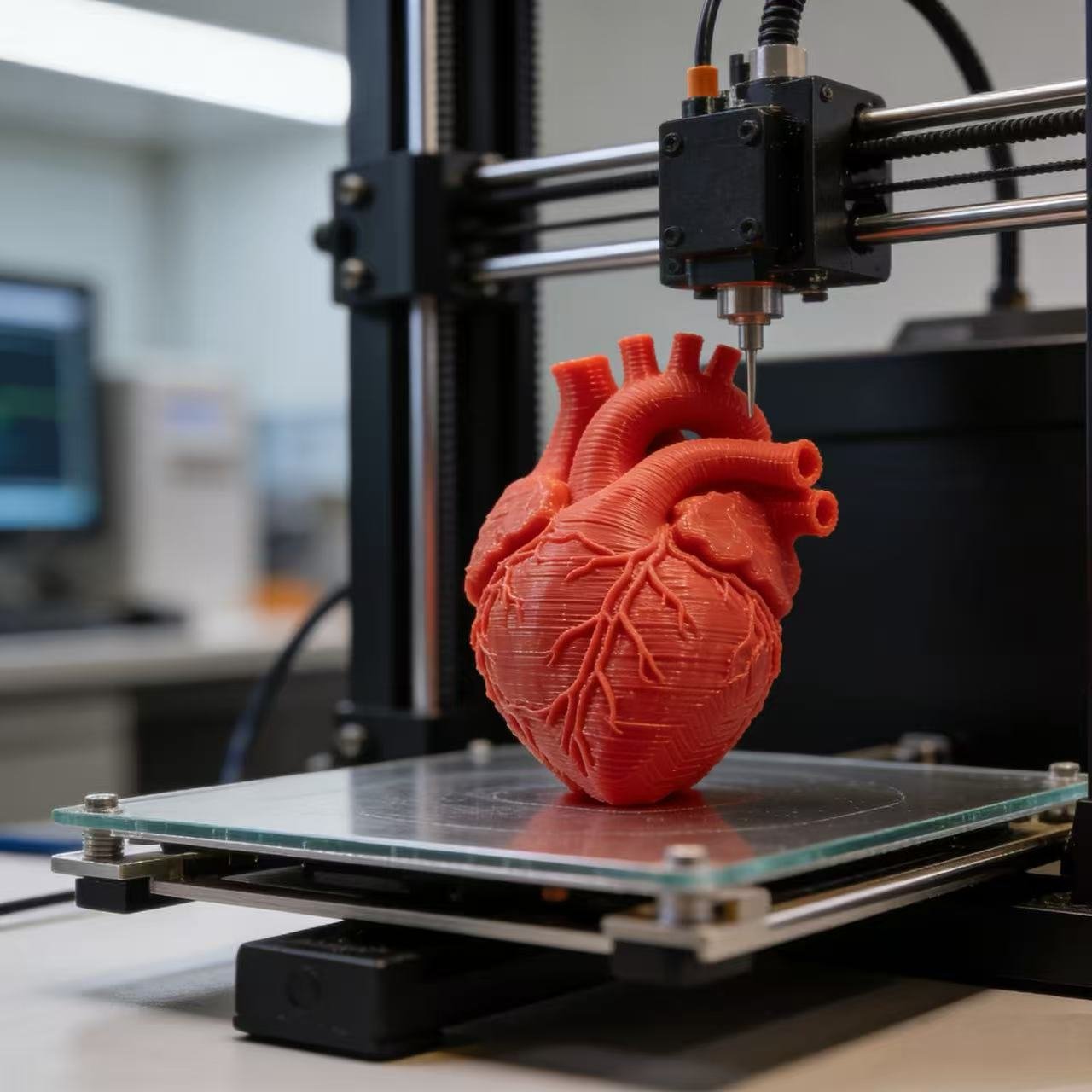
Driven by global carbon reduction goals and the shift toward intelligent manufacturing, the automotive industry is undergoing a profound transformation. Traditional casting and forging processes are increasingly revealing limitations such as high energy consumption, long lead times, and design constraints. In contrast, 3D printing (additive manufacturing) is emerging as a disruptive force, offering unmatched design freedom, material efficiency, and rapid prototyping capabilities. From prototype validation to mass production of functional parts, 3D printing is quietly ushering the automotive supply chain into a new era of lightweight, agile, and smart manufacturing.

🌟Content in this article

Driven by global carbon reduction goals and the shift toward intelligent manufacturing, the automotive industry is undergoing a profound transformation. Traditional casting and forging processes are increasingly revealing limitations such as high energy consumption, long lead times, and design constraints. In contrast, 3D printing (additive manufacturing) is emerging as a disruptive force, offering unmatched design freedom, material efficiency, and rapid prototyping capabilities. From prototype validation to mass production of functional parts, 3D printing is quietly ushering the automotive supply chain into a new era of lightweight, agile, and smart manufacturing.

Three Core Advantages of 3D Printing Over Traditional Manufacturing

Breaking the Lis of Geometric Design

Conventional manufacturing relies on molds, which makes producing complex geometries difficult and often requires the assembly of multiple components—compromising both weight and performance. 3D printing builds components layer by layer, enabling the creation of integrated lightweight structures like honeycombs or topology-optimized frames. For example, in Porsche’s 2023 electric hypercar Mission X, 3D-printed brake calipers were 40% lighter than traditional ones while being 20% stiffer.

Shortening Development and Production Cycles

BMW Group has reduced prototype verification time from 8 weeks to just 5 days using metal 3D printing. Similarly, Polestar used 3D printing for customized interior parts in the Polestar 3, cutting the design-to-production cycle by 60%. This agility allows automakers to quickly respond to customer demands and gain a competitive edge in niche markets.

Reducing Overall Costs

Additive manufacturing optimizes structural designs and reduces material waste, making it ideal for small-batch, high-value components. According to German aerospace manufacturer Premium AEROTEC, switching to 3D printing can reduce unit costs for lightweight aircraft parts by up to 75%—a principle equally applicable in automotive production.

Real-World Application Scenarios

High-Value Functional Components

Critical parts that require high strength and heat resistance—such as brake systems, turbocharger blades, and transmission gears—are already in mass production. General Motors, in collaboration with Desktop Metal, developed 3D-printed stainless steel sealing rings with a 300% longer lifespan.

Customized Interior Components

Customers can design dashboard trims, door handles, and other parts via digital platforms, and manufacturers print and deliver them on demand. Tesla has adopted this model for personalized options on the Model S Plaid.

Tooling and Fixture Optimization

Volkswagen has deployed over 100,000 3D printers across its global factories to produce custom jigs, assembly fixtures, and inspection tools, saving tens of millions of euros annually.

Conclusion

When reducing a single gram translates to a 0.01% drop in energy consumption per 100 km, the value of 3D printing goes far beyond innovation—it becomes a strategic asset in the race toward carbon neutrality. According to Boston Consulting Group, the global market for 3D-printed automotive parts is expected to exceed $37 billion by 2030. This lightweighting revolution is fundamentally redefining the automotive manufacturing paradigm, ushering in an era of on-demand production, zero inventory, and zero waste.

Have parts to make? Get free instant quote today.

Share the Post:

Related Posts

Knowledge Base
Stainless Steel 304: Comprehensive Analysis of Performance, Applications, and Selection Guide

Step into a modern kitchen, open a refrigerator, walk into an office building elevator, or observe medical equipment—in these seemingly different scenarios, one material silently underpins our lives: Stainless Steel 304. As the most common and widely used grade of austenitic stainless steel, SS304 has become an “invisible champion” in industrial manufacturing and daily life, thanks to its excellent corrosion resistance, good formability, and outstanding hygienic properties.
Since stainless steel was invented in the early 20th century, 304 stainless steel has evolved into the world’s most popular stainless steel variety, accounting for approximately 50% of the stainless steel market share. From aerospace to food processing, from architectural decoration to medical devices, this alloy occupies an irreplaceable position in modern materials science due to its unique combination of properties. This article will provide a comprehensive analysis of the chemical composition, mechanical properties, application fields, processing techniques, and selection guidelines for 304 stainless steel, offering a thorough reference for engineers, designers, purchasers, and general consumers.


Read More

Join our newsletter to stay updated

Scroll to Top