Knowledge Base


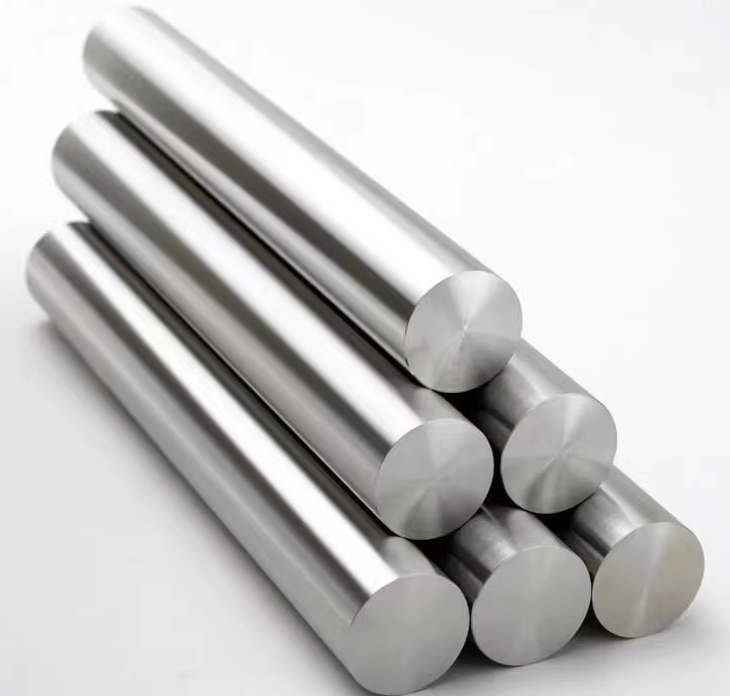
Among the diverse family of stainless steels, if one is to seek the optimal balance between excellent corrosion resistance and outstanding machinability, then stainless steel 303 undoubtedly ranks among the top choices for engineers and mechanics. As an austenitic stainless steel specifically optimized for mechanical processing, 303 plays an irreplaceable role in automated production and precision part manufacturing. Whether it is tens of thousands of standard parts or complex parts with strict requirements for surface finish, 303 stainless steel can stand out with its stable and efficient processing performance. This article will take you through a comprehensive understanding of this “designed for processing” material.
Stainless steel 303 is not a single-component metal; instead, it is a functional material formed by precisely blending alloy elements. The superiority of its performance lies in the scientific composition; and its compatibility in mechanical processing is also closely related to various core properties. Understanding the “genetic code” of stainless steel 303 is the foundation for mastering its application techniques.
Stainless steel 303 is a typical easy-to-machine type of austenitic stainless steel, belonging to the 18-8 series (containing approximately 18% chromium and 8% nickel). It is derived from 304 by adding sulfur or selenium elements, which gives the material excellent cutting performance and processing efficiency. The 303 material is commonly used for machining parts, CNC processing parts, and mass production of automatic lathe parts, and is therefore also known as “automatic lathe stainless steel”.
In the industry, stainless steel 303 is also commonly referred to by the following naming convention:
SUS303 (Japanese JIS standard)
1.4305 (European EN standard)
UNS S30300 (US UNS standard)
AISI 303 (American AISI standard)
The main difference between it and 304 is not its corrosion resistance, but its mechanical processing performance. The cutting performance of 303 is at the leading level among all austenitic stainless steels, and it is one of the most widely used materials in the CNC processing industry.
303 stainless steel is a wear-resistant variant derived from the classic 304 stainless steel (18-8 stainless steel) by adding sulfur (S) and/or selenium (Se). Its typical chemical composition is as follows:
Carbon (C): ≤0.15%
Chromium (Cr): 17.00 – 19.00% (forms the basis for corrosion resistance)
Nickel (Ni): 8.00 – 10.00% (stabilizes the austenitic structure, providing toughness and corrosion resistance)
Manganese (Mn): ≤2.00%
Silicon (Si): ≤1.00%
Phosphorus (P): ≤0.20%
Sulfur (S): ≥0.15% (a key element, forms manganese sulfide inclusions, facilitating chip removal and lubrication)
Selenium (Se): (may be added to replace part of sulfur, further improving machinability and surface quality)
Core modification principle: The added sulfur/sever and manganese form a large number of tiny, evenly distributed manganese sulfide (MnS) inclusions. These inclusions act as “chipping agents” and internal lubricants during the cutting process, significantly reducing cutting force, minimizing tool wear, and generating short and easily removable chips.
Density: 7.93 g/cm³
Melting point: Approximately 1400 – 1450 °C
Tensile strength: ≥ 620 MPa
Yield strength (0.2%): ≥ 240 MPa
Strain at break: ≥ 40%
Hardness: Brinell hardness is usually ≤ 200 HB; in the annealed state, it is approximately 150 – 200 HB.
Magnetic property: Usually non-magnetic or weakly magnetic (may develop a slight magnetic property after cold processing).
This is a crucial point that must be taken into consideration when selecting materials. Due to the addition of sulfur, the overall corrosion resistance of 303 is slightly lower than that of 304.
Advantages: In most atmospheric environments, fresh water, and mild industrial settings, it still maintains excellent resistance to rust and oxidation.
Limitations: Sulfide inclusions may serve as the starting point for localized corrosion (such as pitting corrosion, crevice corrosion). Therefore, 303 should be used with caution or avoided in the following environments:
High chloride ion environment (such as coastal areas, chemical plants)
Strongly oxidizing acid environment
For long-term immersion conditions with extremely high requirements for resistance to pitting corrosion
Summary: If the part is mainly used for mechanical assembly, drying or mild humid environments, the corrosion resistance of 303 is completely sufficient. If it is used in corrosive media or exposed to the outdoors for a long time, 304 or 316 should be given priority.
Based on its scientific composition, stainless steel 303 possesses a series of core properties suitable for mechanical processing, covering aspects such as cutting performance, mechanical properties, and corrosion resistance. These properties collectively determine its application value in various processing scenarios.
The machinability of stainless steel 303 is its most prominent performance advantage and also the key feature that distinguishes it from other austenitic stainless steels. In mechanical processing, cutting performance is typically measured by indicators such as cutting speed, tool life, and surface roughness of the processed product. Compared with 304 stainless steel, the cutting speed of 303 can be increased by 30%-50%, and under the same processing conditions, the tool life can be extended by 2-3 times, and the surface roughness after processing can be stabilized at Ra1.6-Ra3.2 μm, meeting the surface requirements of most precision parts without the need for additional polishing.
Behind this advantage, apart from the chip-breaking effect of sulfides, it is also related to the uniformity of the material’s structure. The austenitic structure of stainless steel 303 is fine and uniform, with no obvious segregation phenomenon. During the cutting process, the deformation pattern of the material is stable, and problems such as “sticking to the cutter” or “breaking the cutter” are less likely to occur. It is especially suitable for continuous cutting processing of complex-shaped parts, such as thread processing and slot processing, for fine operations.
Mechanical processing not only requires the material to be easy to machine, but also demands that it possess sufficient mechanical strength and plasticity to withstand the cutting force and forming pressure during the processing. The mechanical properties of stainless steel 303 have been verified through extensive practical tests and can fully meet the usage requirements of most mechanical parts. The mechanical property indicators at room temperature are as follows:
It is worth noting that the mechanical properties of stainless steel 303 are influenced by the processing method. For instance, after cold processing, the strength of the material will increase, the hardness will also rise, while the plasticity will decrease. Therefore, in actual production, the mechanical properties of the material can be controlled according to the requirements of the parts by adjusting the processing method.
Although stainless steel 303 sacrifices some corrosion resistance due to the increase in sulfur content, it still retains a certain level of corrosion resistance and can adapt to most non-extreme corrosive environments. At room temperature in dry air, 303 maintains good stability and is not prone to rusting; in neutral aqueous solutions, such as fresh water, seawater (short-term contact), it also exhibits good corrosion resistance.
However, compared with 304 stainless steel, 303 has weaker corrosion resistance in acidic and alkaline environments and is prone to local corrosion. Therefore, when choosing materials, a comprehensive judgment based on the usage environment of the parts should be made. For example, for parts used in food machinery that come into contact with weakly acidic food juices, 303 can meet the requirements; but for parts used in chemical equipment that come into contact with strongly corrosive media, 304 or stainless steel models with stronger corrosion resistance should be preferred.
In addition to the aforementioned core features, stainless steel 303 also possesses some auxiliary features that further expand its application scope. For instance, it has excellent welding properties and can be connected using conventional welding methods such as arc welding or argon arc welding. The strength of the joint after welding can reach over 80% of the base material; moreover, 303 has good polishing performance, and after a simple polishing process, the surface can achieve a mirror-like effect, which is suitable for parts with high requirements for appearance.
Smooth chip removal without sticking to the blade
The cutting tools have minimal wear, resulting in a 30% – 200% increase in production efficiency.
Applicable to: shafts, connecting pieces, optical shafts, round bar parts, and precision fastening components.
303 is widely recognized in the industry as the “preferred stainless steel material for automatic lathes”.
It is extensively used in:
Small screw
Spring seat
Threaded adapter
Pneumatic hydraulic components
Because sulfur enhances the chip-breaking performance of the material during cutting, therefore:
✔ The internal thread is easy to machine
✔ Thread tapping is free from chip lumps
✔ The thread surface is smooth and has high precision
Suitable for:
Precision fasteners, non-standard nuts, external hexagonal connectors, small mechanical connection parts.
In structures that require integrated processes of turning, milling, drilling and tapping, the actual processing cycle of 303 is significantly shorter than that of 304.
For example:
Precision instrument coupling
Electronic automated positioning components
Medical connector housing
Can be carried out:
Vibration polishing
Electrolytic polishing
Metal passivation
Ultrasonic cleaning
The surface finish can reach Ra0.8 or higher, making it suitable for the production of parts with high appearance requirements.
High-speed steel cutting tools: 25–45 m/min
Hard alloy cutting tools: 80–150 m/min
Drilling speed: 20 – 80 meters per minute
The 303 material has excellent self-sharpening performance. It is recommended for use:
✔ Internal cooling blade
✔ Semi-circular chip-breaking groove
✔ Rough machining with large back-clearance
Use cutting oil or emulsion containing sulfur
The finishing process uses a low feed rate of 0.05 – 0.12 mm per revolution.
After processing, perform passivation or polishing.
303 cannot undergo quenching and tempering heat treatment. Instead, the following methods are generally adopted:
Cold drawing
Polishing
Solid solution treatment
The hardness is generally between HB 160 and 190.
With its excellent machinability and sufficient performance, 303 stainless steel is widely used in the following fields:
Standard components and fasteners: This is its largest application market. It includes hexagonal bolts, nuts, screws, pin shafts, etc. During mass production, its efficient automatic lathe processing capabilities bring significant cost advantages.
Shaft-type and transmission components: such as small gear shafts, mandrels, valve stems, connecting rods, etc. These are rotating parts that require excellent surface finish and dimensional accuracy.
Valves and pump components: Valve cores, valve stems, pump shafts, joints, etc. used in non-corrosive media (such as low-corrosive liquids and gases).
Food processing and medical devices (non-implantable): Components for food machinery, handles for surgical instruments, joint parts of medical devices, etc. It is necessary to ensure that their corrosion resistance meets relevant hygiene standards (such as regular cleaning and disinfection of the environment).
Aerospace and automotive: Used for non-critical structural components, instrument parts, fasteners, etc. that have specific requirements for weight and strength.
Electronic industry: Components such as semiconductor equipment parts and connector housings that require precise processing and certain corrosion resistance.

With the continuous development of the mechanical manufacturing industry, the requirements for material performance are also constantly increasing. Stainless steel 303, as an excellent easy-to-machine stainless steel, has attracted much attention regarding its development trend and application prospects. In the future, stainless steel 303 will achieve further development in aspects such as composition optimization, process innovation, and application expansion, providing better material options for the mechanical processing industry.
Currently, the component optimization of stainless steel 303 mainly focuses on two aspects: Firstly, while ensuring the easy-cutting performance, the content of elements such as sulfur and phosphorus is adjusted to enhance the corrosion resistance of the material. For example, a 303 improved model with low sulfur and high chromium was developed, which maintains good cutting performance while making the corrosion resistance close to that of 304 stainless steel, expanding its application range in corrosive environments. Secondly, by adding trace alloy elements such as niobium and titanium, the microstructure of the material is refined, improving its mechanical properties and high-temperature performance, meeting the application requirements of special conditions.
Meanwhile, component optimization will also focus on cost control. By reasonably proportioning alloy elements, while ensuring the material performance, it will reduce the cost of raw materials, enhance the cost-effectiveness of stainless steel 303, and strengthen its market competitiveness.
The innovation of processing techniques will be an important direction for the future development of stainless steel 303. On one hand, with the advancement of advanced processing technologies such as high-speed cutting and ultra-precision processing, the processing techniques of stainless steel 303 will be further optimized. By adopting higher cutting speeds, more precise cutting parameters, and more efficient cooling and lubrication methods, the processing efficiency and part quality can be improved, and production costs can be reduced. On the other hand, the application of additive manufacturing technology will open up new processing paths for stainless steel 303. Through 3D printing technology, complex-shaped 303 stainless steel parts can be directly manufactured, reducing processing procedures and improving material utilization.
Furthermore, the innovation of surface treatment processes will also enhance the performance of stainless steel 303. For instance, by using technologies such as plasma spraying and laser cladding, a wear-resistant and corrosion-resistant coating can be formed on the surface of the parts, further extending the service life of the parts and expanding their application fields.
With the development of emerging industries such as new energy, new materials, and high-end equipment manufacturing, the application scope of stainless steel 303 will further expand. In the new energy sector, it can be used to process battery components and charging station parts for new energy vehicles; in the new materials sector, it can be used as a mold material to process new composite material parts; in the high-end equipment manufacturing sector, it can be used to process precision components in fields such as aerospace and marine engineering.
Meanwhile, in the traditional fields, the application of stainless steel 303 will also be further enhanced. By improving processing accuracy and surface quality, it can meet higher standards of usage requirements. For instance, in the field of precision instruments, it can be used to process sensors and optical components with higher precision; in the field of medical devices, it can be used to process more complex surgical instruments and implantable parts.
Stainless steel 303 is the most representative easy-to-machine austenitic stainless steel in the mechanical processing industry. It has absolute advantages in CNC lathes, automatic lathes, centering machines, precision processing, and mass production. It combines excellent mechanical properties, high corrosion resistance, and outstanding processing efficiency. It is an engineering material that cannot be replaced by ordinary 304. For enterprises that pursue processing efficiency, tool life, and production cost control, 303 is one of the best choices.
Whether used in precision instruments, automotive parts, electronic components, hydraulic accessories, medical devices or hardware fasteners, stainless steel 303 can provide an ideal balance between processing performance and corrosion resistance, and is an indispensable important material in modern industrial manufacturing.

Start your project today. Get free DFM from professional engineer at ProtoTi.
Why Choose SLS 3D Pr
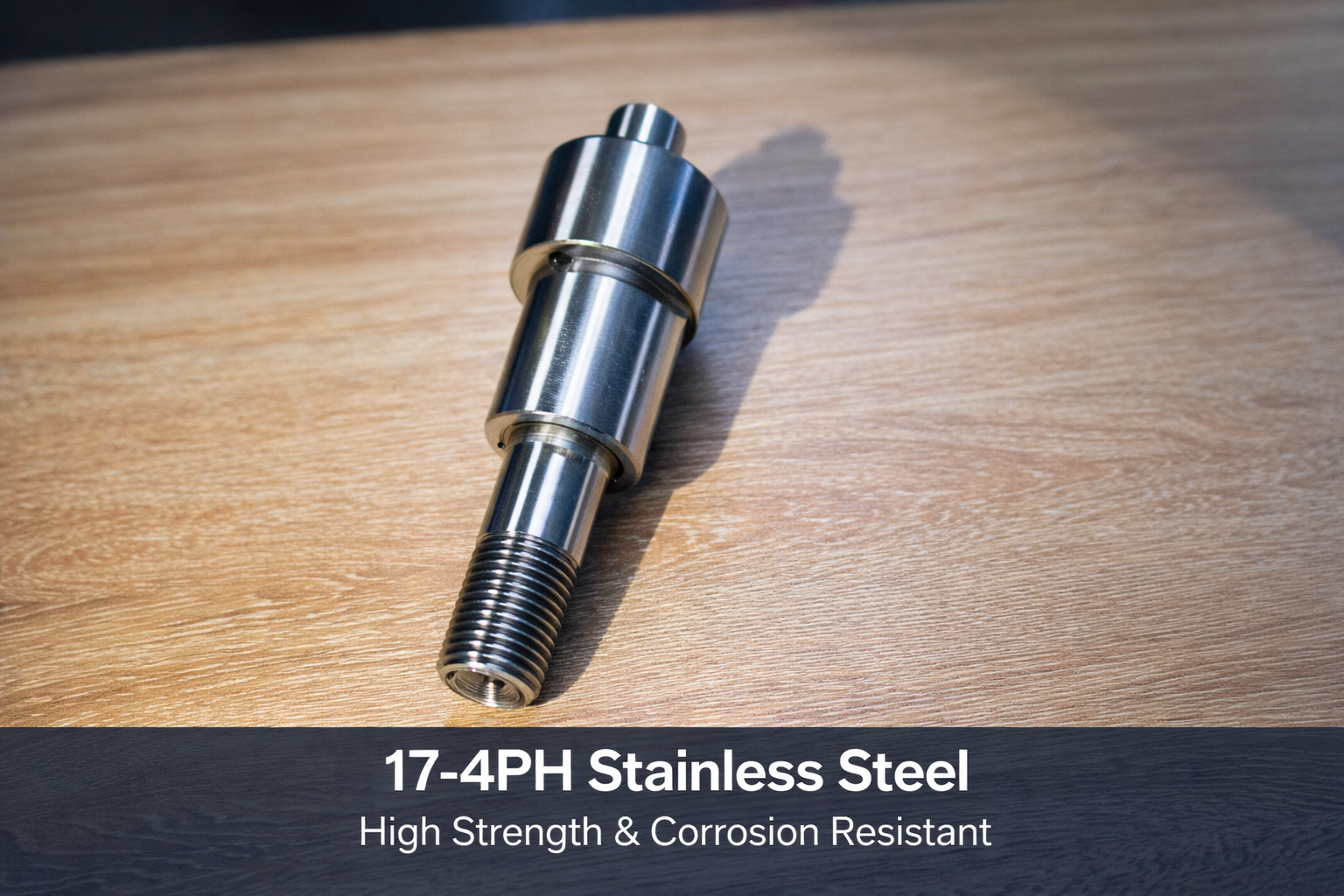
In today’s industrial manufacturing sector, the selection of materials directly determines the performance, lifespan, and cost-effectiveness of the final product. Among numerous high-performance metal materials, 17-4 Stainless Steel (also known as 17-4 PH) has become one of the preferred materials for the aerospace, medical device, petrochemical, and high-end mechanical manufacturing industries due to its unique precipitation hardening characteristics. As a martensitic precipitation hardening stainless steel, 17-4 not only possesses the inherent corrosion resistance of stainless steel but also achieves extremely high strength and hardness through heat treatment. This dual advantage allows it to maintain excellent stability even in extreme environments.
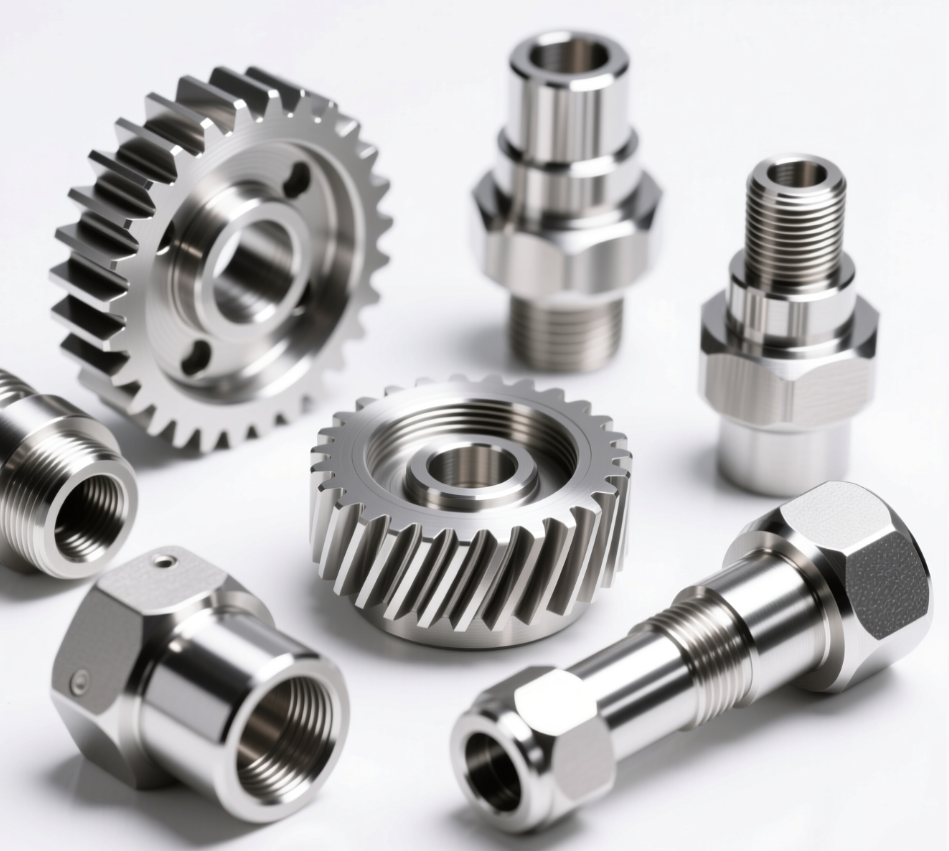
In the chain of high-end manufacturing, CNC (Computer Numerical Control) machining is responsible for giving parts their geometric shapes and dimensional accuracy, while surface treatment determines the lifespan, functionality and reliability of the parts. Among various surface treatment processes, nickel plating has become one of the most commonly used post-processing techniques for CNC machined components due to its unique comprehensive properties – combining corrosion resistance, wear resistance, lubricity and excellent appearance.
Whether it is the precision valve bodies in the aerospace field, the aluminum alloy casings in consumer electronics, or the transmission components in the automotive industry, nickel plating plays an indispensable role.