Knowledge Base



| Material | Primary Properties | Typical Applications |
| Polyamide (PA12, PA11) | High strength, wear-resistant, good chemical resistance | Functional prototypes, automotive parts, enclosures |
| Glass fiber reinforced nylon (PA-GF) | High strength, stable dimensions | Tooling fixtures, structural components |
| Carbon fiber reinforced nylon (PA-CF) | High strength, lightweight, heat-resistant | Aerospace components, automotive structural parts |
| TPU (Elastomer) | High elasticity, resistant to bending, wear-resistant | For footwear, seals, shock-absorbing components |
| Aluminum-filled nylon (Alumide) | Metallic texture, heat-resistant | Appearance parts, functional prototypes, heat dissipation components |
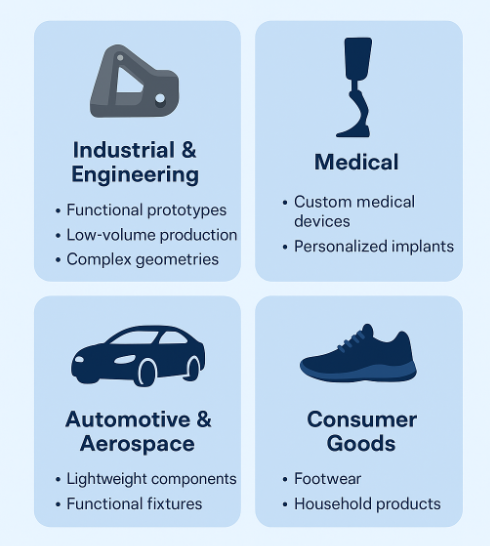
From the above charts and text, we can see that the application scope of selective laser sintering technology is extremely broad, and it is suitable for situations that require high strength, complex geometries, and small to medium batch customized products.
Selective Laser Sintering (SLS) has proven itself as one of the most versatile and reliable 3D printing technologies on the market today. With its ability to deliver strong, functional prototypes and end-use parts across industries—from aerospace to healthcare—SLS offers unmatched freedom of design, excellent mechanical properties, and efficient production.
At ProtoTi, we are committed to helping you unlock the full potential of SLS technology. Whether you need rapid prototyping or large-scale manufacturing, our expertise and advanced equipment ensure precision, consistency, and speed.
👉 Ready to take your project to the next level? Discover how SLS can bring your ideas to life today.

Have parts to make? Get free instant quote today.
Why Choose SLS 3D Pr
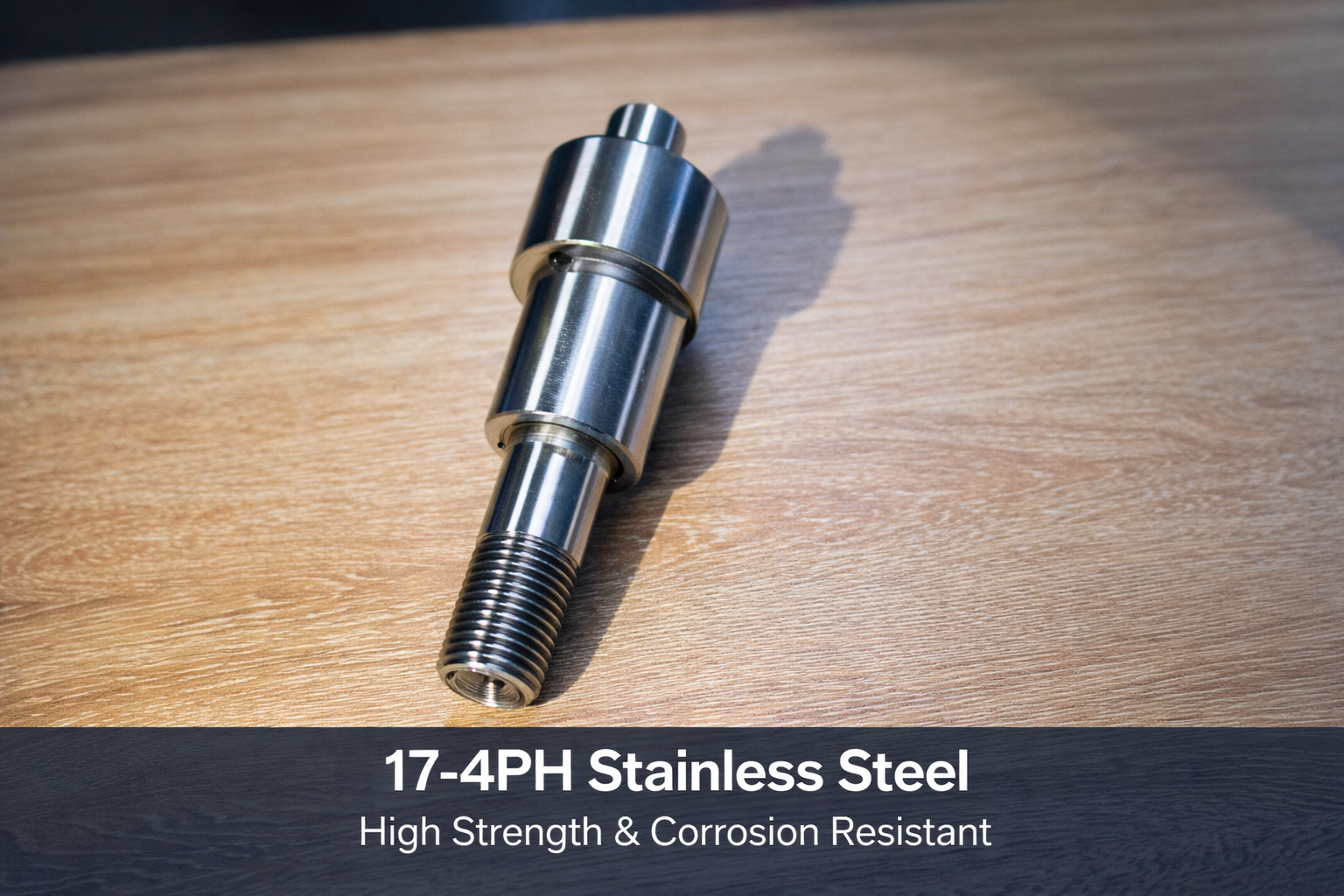
In today’s industrial manufacturing sector, the selection of materials directly determines the performance, lifespan, and cost-effectiveness of the final product. Among numerous high-performance metal materials, 17-4 Stainless Steel (also known as 17-4 PH) has become one of the preferred materials for the aerospace, medical device, petrochemical, and high-end mechanical manufacturing industries due to its unique precipitation hardening characteristics. As a martensitic precipitation hardening stainless steel, 17-4 not only possesses the inherent corrosion resistance of stainless steel but also achieves extremely high strength and hardness through heat treatment. This dual advantage allows it to maintain excellent stability even in extreme environments.
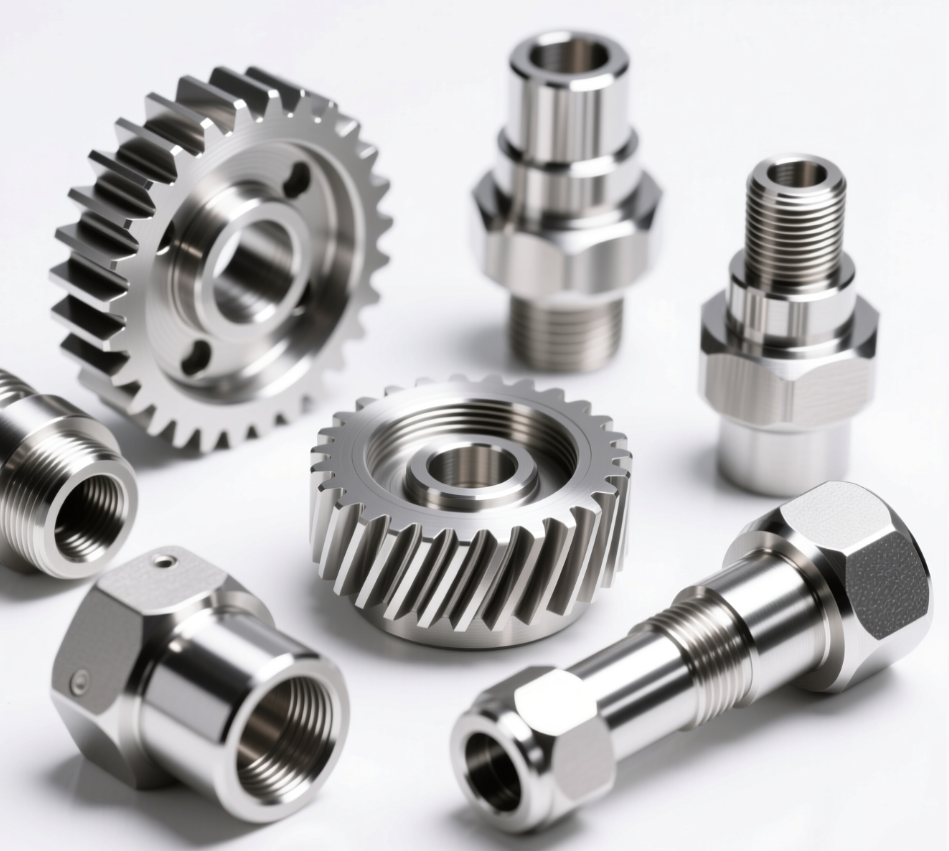
In the chain of high-end manufacturing, CNC (Computer Numerical Control) machining is responsible for giving parts their geometric shapes and dimensional accuracy, while surface treatment determines the lifespan, functionality and reliability of the parts. Among various surface treatment processes, nickel plating has become one of the most commonly used post-processing techniques for CNC machined components due to its unique comprehensive properties – combining corrosion resistance, wear resistance, lubricity and excellent appearance.
Whether it is the precision valve bodies in the aerospace field, the aluminum alloy casings in consumer electronics, or the transmission components in the automotive industry, nickel plating plays an indispensable role.