💰Spring Renewal & Women’s Day Promotion – 8% OFF Limited Time
🌸With the arrival of spring, our company has officially resumed full operation and production capacity after the Spring Festival holiday. We sincerely thank all customers for your patience and support.
To honor International Women’s Day and thank you for your trust, we are launching a limited-time special promotion:
⏰ Promotion Time March 5 – March 31
🎯 Exclusive Discount 8% OFF Coupon for all orders placed during the valid period.
💡 Warm Tips Place your order early to enjoy priority production and guaranteed delivery time.
This event is dedicated to celebrating the power of women worldwide and thanking you for your continued partnership.
For any inquiries, please contact our sales team.
Thank you for choosing us, and let’s move forward to a prosperous new year together!
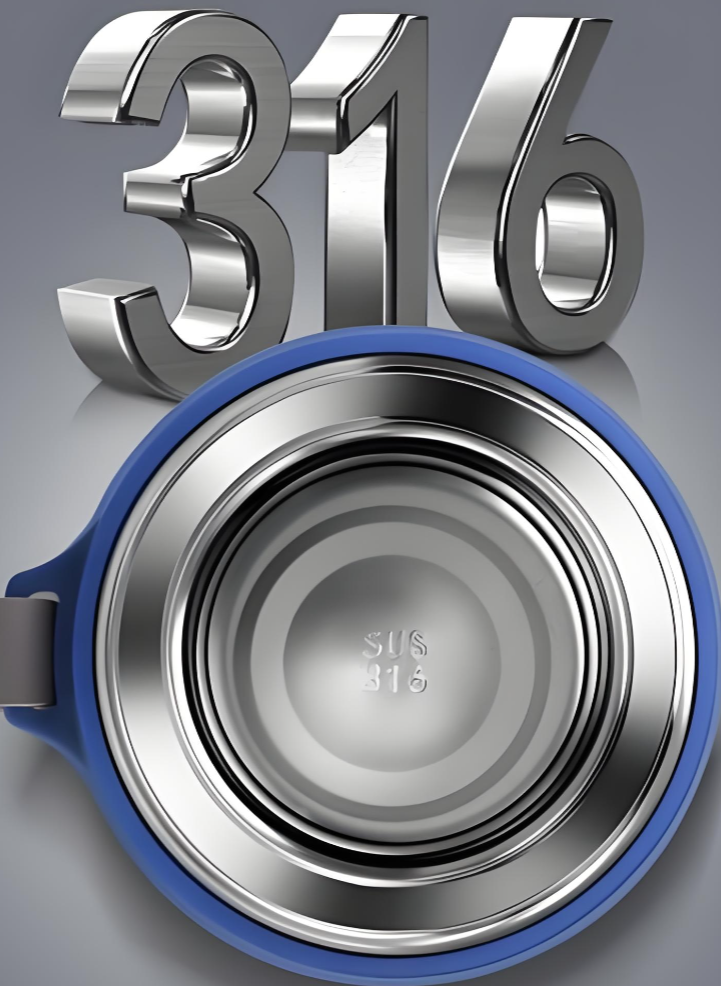
In the grand narrative of modern industrial civilization, every minor advancement in materials science often leads to a significant leap in human productivity. Among various metal materials, stainless steel undoubtedly ranks as one of the most revolutionary inventions. It not only transformed the appearance of buildings, redefined safety standards in healthcare, but also became the cornerstone in key fields such as chemical engineering, marine, and energy. Within the vast family of stainless steel, 316 stainless steel (and its low-carbon variant 316L) is hailed as the "industrial gold" due to its outstanding comprehensive performance, and is the preferred material in highly corrosive environments.
🌟Content in this article
What is 316 stainless steel? – Definition of the material and its core value
Basic Definition
316 stainless steel is an austenitic stainless steel belonging to the 300 series (Cr-Ni system). Its designation in the American AISI standard is 316, while in the new Chinese national standard, it corresponds to 06Cr17Ni12Mo2 (the old designation was 0Cr17Ni12Mo2). In terms of commercial importance, 316 is second only to 304, but in terms of technical performance, it is often regarded as a more premium choice.
Core value: The qualitative change brought about by molybdenum elements.
The most fundamental difference between 316 and 304 lies in the presence or absence of molybdenum. 304 does not contain molybdenum and relies on the protective oxide film formed by chromium (Cr) and nickel (Ni) to resist general corrosion. In contrast, 316 contains 2 to 3% of molybdenum (Mo), and the addition of this crucial element completely alters the corrosion resistance profile of the steel.
The main function of molybdenum is to enhance the passivation ability of steel, especially in environments containing chloride ions. Molybdenum can promote the rapid re-passivation of the chromium-containing oxide layer after local damage, thereby significantly improving the resistance to pitting corrosion and crevice corrosion. This makes 316 an indispensable basic material in the marine and chemical industries.
Detailed Explanation of Chemical Composition and Physical Properties
Standard chemical composition range
Standard chemical composition rangeAccording to the ASTM A240 and GB/T 3280 standards, the chemical composition of 316 stainless steel is typically controlled within the following range:
Element
Symbol
ASTM A240 Standard
EN 10088-2 Standard
GB/T 4237 Standard
Primary Function
Carbon
C
≤0.08%
≤0.08%
≤0.08%
Controls strength and corrosion resistance
Silicon
Si
≤1.00%
≤1.00%
≤1.00%
Improves casting properties
Manganese
Mn
≤2.00%
≤2.00%
≤2.00%
Deoxidizer, increases strength
Phosphorus
P
≤0.045%
≤0.045%
≤0.045%
Impurity, must be controlled
Sulfur
S
≤0.030%
≤0.030%
≤0.030%
Impurity, must be controlled
Chromium
Cr
16.0-18.0%
16.5-18.5%
16.0-18.0%
Forms passive film, provides corrosion resistance
Nickel
Ni
10.0-14.0%
10.0-13.0%
10.0-14.0%
Stabilizes austenitic structure
Molybdenum
Mo
2.0-3.0%
2.0-2.5%
2.0-3.0%
Enhances pitting corrosion resistance
Iron
Fe
Balance
Balance
Balance
Base element
Physical properties
Density: Approximately 8.0 g/cm³, similar to 304, slightly higher than carbon steel.
Melting point: approximately 1370 – 1400°C.
Elastic modulus: Approximately 193 GPa.
Thermal conductivity: Low (approximately 16.3 W/m·K at 100°C), which means that stainless steel has a slow heating and cooling rate, and this can lead to heat concentration during processing.
Coefficient of thermal expansion: relatively large, approximately 17.5 μm/m·°C. During welding, the issue of thermal deformation needs to be taken into account.
Specific heat capacity: Approximately 500 J/kg·K.
Resistivity: Approximately 0.74 μΩ·m.
The main properties of 316 stainless steel
The corrosion resistance of 316 stainless steel is its most crucial advantage, which is manifested in the following aspects:
Corrosion resistance: The addition of molybdenum element increases the point corrosion resistance equivalent value (PREN) of 316 stainless steel to above 28. The PREN calculation formula is: PREN = %Cr + 3.3×%Mo + 16×%N. The test shows that 316LVM has a critical point corrosion temperature of 35 to 40℃ in a 5% NaCl solution.
Crevice corrosion resistance: In crevice environments (such as flange connections, below gaskets), 316 stainless steel performs much better than 304 stainless steel. This is because molybdenum element can inhibit the acidification process in the crevice. Stress corrosion cracking resistance: 316 stainless steel has strong resistance to stress corrosion cracking in chloride ion-containing environments, suitable for marine platforms, chemical equipment, etc.
Acid and alkali corrosion resistance: 316 stainless steel has good corrosion resistance to most organic acids, inorganic acids and alkaline solutions. However, it needs to be used with caution in strong oxidizing acids (such as concentrated sulfuric acid, concentrated nitric acid).
Seawater corrosion resistance: 316 stainless steel is widely used in seawater environments. The corrosion rate on seawater heat exchangers is only 0.025mm/year, and it is hailed as “marine steel”.
Mechanical Properties of Stainless Steel 316 vs 316L
Property
316
316L
Test Standard
Tensile Strength
≥515 MPa
≥485 MPa
ASTM A240
Yield Strength (0.2% offset)
≥205 MPa
≥170 MPa
ASTM A240
Elongation
≥40%
≥40%
ASTM A240
Hardness (Brinell)
≤217 HB
≤217 HB
ASTM A240
Hardness (Rockwell B)
≤95 HRB
≤95 HRB
ASTM A240
The influence of temperature on performance:
Low-temperature performance: 316 stainless steel performs exceptionally well in low-temperature environments, and can be used in liquid nitrogen (-196℃) and even liquid helium (-269℃) conditions without experiencing brittle fracture.
High-temperature performance: Below 800℃, 316 stainless steel exhibits excellent oxidation resistance and creep resistance. The continuous operating temperature can reach 870℃, and the intermittent operating temperature can reach 925℃.
The 316 family lineage – the differences between 316L, 316H, and 316Ti
316 is not a single grade, but a family. Choosing the wrong grade may result in welding cracks or failure under high temperatures. It is crucial to understand the characteristics of each variant.
316L: The King of Low-Carbon Versions
Definition: L stands for “Low Carbon” (low carbon), and the carbon content is typically reduced to ≤ 0.03%.
Advantages: The low carbon content significantly reduces the tendency of carbides (such as chromium carbide) to precipitate at grain boundaries, thereby resisting intergranular corrosion. After the material is welded, the heat-affected zone will not lose its corrosion resistance due to heating. Therefore, 316L is the preferred choice for welded components.
Application: Welded components with a thickness exceeding approximately 6mm must use 316L, or undergo post-weld annealing treatment (which is usually too costly). In modern industries, the application scope of 316L has far exceeded the 316 standard version, especially in industries such as chemicals, seawater desalination, and pharmaceuticals.
316H: The Defender in High-Temperature Environments
Definition: H stands for “High Carbon” (high carbon), with the carbon content controlled within the range of 0.04% to 0.10%.
Advantages: In high-temperature environments (such as when the continuous working temperature exceeds 925°C), a higher carbon content can provide greater high-temperature strength (creep strength). A higher carbon content helps to form stable carbides and enhance the strength at the grain boundaries.
Application: Primarily used in pressure vessels, boiler superheaters and steam pipelines in power plants, as well as high-temperature process pipelines in oil refineries.
316Ti: A Stable Choice
Definition: Add titanium (Ti) element to 316 (typically at a concentration of approximately 0.5%).
Principle: Titanium has a much stronger affinity for carbon than for chromium. It forms titanium carbide (TiC) first, thereby preventing chromium carbides from precipitating at the grain boundaries and avoiding sensitization. This is a “stabilization” treatment that prevents intergranular corrosion in the material during welding or high-temperature service.
Advantages: As an alternative to 316L, it is particularly suitable for thick-section welded parts or for applications where the component needs to remain at temperatures above 800°C for a long period of time to prevent sensitization. Additionally, in strongly oxidizing media, 316Ti sometimes performs better.
Other variations
316N: Adds nitrogen (N) to enhance strength.
316LN: Low carbon + nitrogen strengthening, featuring both corrosion resistance and high strength.
316Lmod: Improved type, designed for specific chemical processes, such as urea production (requiring a lower iron content).
The main application scenarios of 316 stainless steel
The field of medical and biological engineering
The medical industry is one of the fields where 316 stainless steel is most extensively used. It has extremely high requirements for the biocompatibility, corrosion resistance and surface quality of the material.
Surgical instruments: Items such as surgical knives and forceps require extreme cleanliness and corrosion resistance. After electrolytic polishing with 316LVM, the surface becomes very smooth and bacteria are less likely to adhere. Medical-grade 316 stainless steel, after special treatment, has a surface roughness of less than Ra 0.2 μm, effectively reducing bacterial growth.
Implants: For example, heart stents (diameter 2.5 to 4 mm) use ultra-fine grain structure, with strength 30% higher than ordinary ones; some high-end stents do not use nickel, providing better biocompatibility. Orthopedic implants (such as artificial joints, bone screws, bone plates) also widely use 316L materials, with fatigue strength reaching over 450 MPa.
Medical equipment: Components in MRI machines and artificial joints need to come into contact with body fluids without causing rejection. Reaction vessels, fermentation tanks, and pipeline systems in pharmaceutical equipment also extensively use 316 stainless steel tubes to ensure the cleanliness and safety of the drug production process.
Medical device certification: Regular medical-grade 316 stainless steel must pass FDA medical grade certification and SGS environmental protection certification to ensure that the amount of heavy metal leaching from the material complies with biological safety standards.
Chemical and Petroleum Industry
The chemical industry is a traditional strong area for 316 stainless steel, where its excellent corrosion resistance is fully demonstrated in acidic and alkaline environments.
Reactor equipment: 316 stainless steel contains molybdenum, which gives it excellent corrosion resistance and enables it to withstand the erosion of various corrosive media on the equipment. During the pharmaceutical process, various chemical substances such as acids, bases, and organic solvents are involved. 316 stainless steel can ensure that the reaction vessel will not be damaged by corrosion during long-term use.
Pipeline system: 316 stainless steel pipes have high strength and can withstand the pressure inside the reactor. At the same time, their good sealing performance can prevent the leakage of reaction substances and avoid harm to the environment and personnel.
Heat exchanger: In chemical production, heat exchangers need to withstand the dual tests of high temperature, high pressure and corrosive media. The comprehensive performance of 316 stainless steel makes it an ideal choice.
Storage tanks and containers: Storage tanks used for storing acid, alkali, and salt solutions, 316 stainless steel can effectively resist medium corrosion and extend the service life of the equipment.
Food processing and catering industry
Food-grade 316 stainless steel is widely used in the food industry due to its excellent corrosion resistance and non-toxicity.
Food processing equipment: Equipment used for processing high-salt and high-acid foods (such as seafood and vinegar). Since such equipment needs to have stronger corrosion resistance, it is mostly made of 316 stainless steel. The mixing tanks, conveying pipelines, filling equipment, etc. in the food production line all use 316 stainless steel materials.
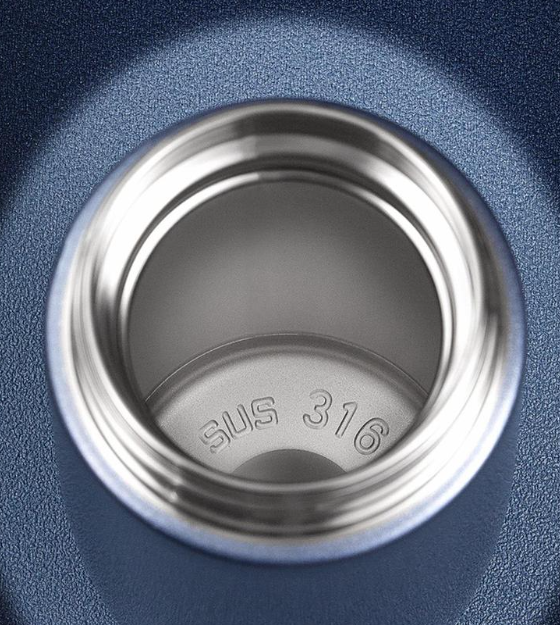
Food storage containers: Large food storage tanks and fermentation tanks are all made of 316 stainless steel to ensure that food is not contaminated during storage. Dining utensils: High-end thermos cups, tableware, kitchenware, etc. are all made of 316 stainless steel. They are not only safe and hygienic, but also durable and attractive. For stainless steel used for food contact, there are clear regulations by the state. 316 stainless steel complies with the GB 4806.9-2016 food safety national standard.
Wine-making equipment: The fermentation tanks and storage tanks used in beer and wine production are all made of 316 stainless steel. This material is resistant to corrosion by alcohol and organic acids.
Processing and welding of 316 stainless steel
Processing performance
316 stainless steel has excellent processing properties, but the following points need to be noted during the processing:
Cutting processing: The tendency of 316 stainless steel to undergo work hardening is relatively strong. During cutting, appropriate tools and cutting parameters should be selected. It is recommended to use hard alloy tools, with moderate cutting speed and adequate cooling.
Forming processing: The elongation of 316 stainless steel can reach over 40%, making it suitable for deep drawing, bending, and other forming processes. However, attention should be paid to the problem of work hardening, and intermediate annealing treatment may be necessary when necessary.
Surface treatment: 316 stainless steel can undergo various surface treatments such as polishing, sandblasting, spraying, and PVD coating. Surface treatment not only affects appearance but also affects corrosion resistance.
Welding technology
The welding performance of 316 stainless steel is good, but the following points need to be noted:
Welding methods: Common welding methods include TIG welding, MIG welding, and manual arc welding, etc. For thin plate welding, TIG welding is the preferred choice; for thick plate welding, MIG welding is more efficient.
Welding material selection: When welding 316 stainless steel, matching welding materials should be selected, such as 316L welding wire and 316L welding rods. For more demanding applications, welding materials with higher molybdenum content can be used.
Welding process: During welding, the heat input should be controlled to avoid intergranular corrosion caused by overheating. After welding, acid washing and passivation treatment are recommended to restore the corrosion resistance.
Welding deformation control: The thermal expansion coefficient of 316 stainless steel is relatively large, and welding is prone to deformation. Reasonable welding sequence and fixture fixation should be adopted to control the welding deformation.
Heat treatment process
Annealing treatment: The annealing temperature for 316 stainless steel is generally 1050 – 1150℃. After holding, it is quickly cooled. The annealing treatment can eliminate work hardening, restore the plasticity and corrosion resistance of the material.
Solution treatment: For 316 stainless steel after welding, it is recommended to perform solution treatment to allow carbides to dissolve again, improving the resistance to intergranular corrosion.
Stress relief: For 316 stainless steel that has undergone cold processing or welding, stress relief treatment can be carried out to reduce residual stress and improve dimensional stability.
The future development trend of 316 stainless steel
Direction of Technological Innovation
High-performance: By optimizing the chemical composition and processing techniques, the strength, corrosion resistance and high-temperature performance of 316 stainless steel can be further enhanced. For instance, ultra-fine-grained 316 stainless steel has a strength increase of over 30%.
Environmental-friendly: With the increasing environmental requirements, the production and processing of 316 stainless steel will place greater emphasis on energy conservation and emission reduction. Green manufacturing technologies will become an important direction for industry development.
Intelligent: Utilizing big data and artificial intelligence technologies, the production process of 316 stainless steel can be intelligently controlled, improving product quality and production efficiency.
Customized: For different application scenarios, customized 316 stainless steel products will be developed to meet the special needs of customers. The company always adheres to technological innovation, continuously optimizing the deep drawing performance and corrosion resistance of 316L stainless steel plates, and launching multiple customized products.
Market expansion direction
New Energy Field: With the development of new energy industries such as hydrogen energy and energy storage, the application of 316 stainless steel in related equipment will increase significantly.
Medical Health: The aging population and improvement in medical standards will drive the growth of the medical device market, and the application prospects of 316 stainless steel in the medical field are broad.
Marine Economy: The implementation of the strategy of building a maritime power will drive the development of marine engineering and ship manufacturing, and the demand for 316 stainless steel will continue to grow.
High-End Manufacturing: The upgrading of manufacturing will promote the development of high-end equipment and precision instruments, and 316 stainless steel, as a key material, will benefit from this.
Conclusion: Make rational choices and utilize things to the fullest extent.
316 stainless steel, as the “industrial gold”, plays an indispensable role in modern industry. Its outstanding corrosion resistance, excellent comprehensive performance, and wide range of application scenarios make it the preferred material for high-end applications.
However, choosing 316 stainless steel is not about “the more expensive, the better”. It requires a rational judgment based on the actual application scenario. In general environments, 304 stainless steel may be sufficient; but in high-corrosive environments, medical fields, marine engineering and other scenarios, the advantages of 316 stainless steel are irreplaceable.
CNC machining on demand
Start your project today. Get free DFM from professional engineer at ProtoTi.
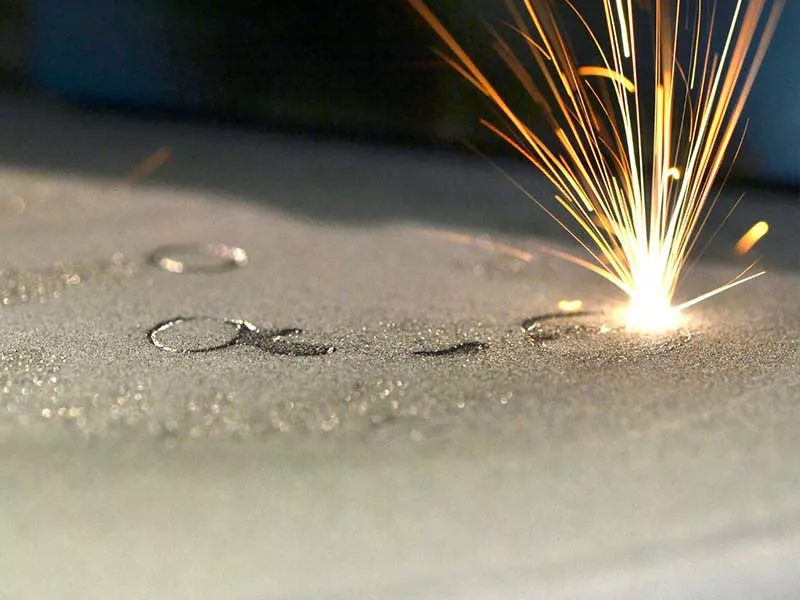
Metal additive manufacturing, especially Selective Laser Melting (SLM), has transformed modern manufacturing by enabling complex geometries, lightweight structures, and highly
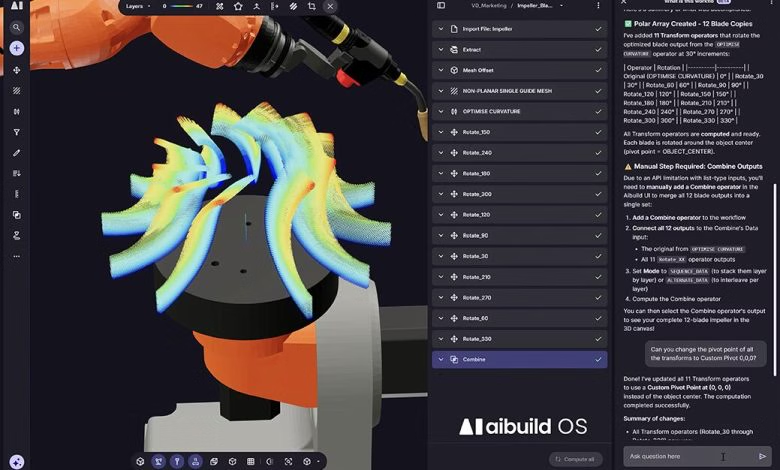
UK-based AM software company Aibuild has introduced Aibuild OS, an advanced AI-based operating system that automates the engineering lifecycle, from CAD to CAM. The OS uses agentic AI to deliver a highly autonomous program that can operate independent of human supervision and help to increase productivity and efficiency for part production.
The Aachen-based Fraunhofer Institute for Laser Technology (Fraunhofer ILT) is to research titanium aluminide hydrogen reactors and heat exchangers. The