📦2026 Chinese New Year Holiday & ProtoTi Shipping Schedule
Dear Valued Customer,
Thank you sincerely for your continued trust and support throughout the year 🙏 As the Chinese New Year approaches, order volumes naturally increase as we prepare for the holiday season.
For our team in China, the Chinese New Year is the most important time of the year—a moment after months of hard work to reunite with family and celebrate together 🧧🏮. We truly appreciate your understanding and support during this special period.
To help you plan ahead, please find our shipping arrangements below:
Orders placed before February 1st will be shipped by the cut-off date of February 11th.
Orders placed between February 2nd and February 4th may still be shipped before February 11th, depending on production capacity.
Orders placed on or after February 5th will require extended lead time and will be shipped gradually starting February 24th.
Please note that most manufacturers in China, including ProtoTi, will pause production from February 10th to February 23rd for the Chinese New Year holiday.
If the potential delay does not fit your schedule, please let us know as soon as possible. We will be happy to assist with a refund, provided the order has not yet entered production.
Once again, thank you for your understanding and for being a valued partner of ProtoTi. For any delayed orders, we will proactively provide individual updates with confirmed delivery timelines.
On behalf of the entire ProtoTi Global Business Team, we wish you and your family a joyful, healthy, and prosperous New Year 🎉✨
HP is announcing that it will have a new generation of PA 11. With the 3D HR PA 11 Gen2 material, the company will offer up to 80% material reusability, which, it says, will lead to a 40% lower part cost. That should be a welcome advance for HP users. More parts could be made with the new material, and business cases will be better. PA 11 is not easy to process, but the properties the material delivers, as well as part performance, make it a widely desired choice.
Michael Rosicky, Global Production Manager at Invent Medical, stated,
“We know that mechanical durability is the key to delivering high-quality, reliable medical devices. The new HP 3D HR PA 11 Gen2 material shows strong potential to further enhance performance, repeatability, and robustness in next-generation custom O&P devices produced with HP MJF technology.”
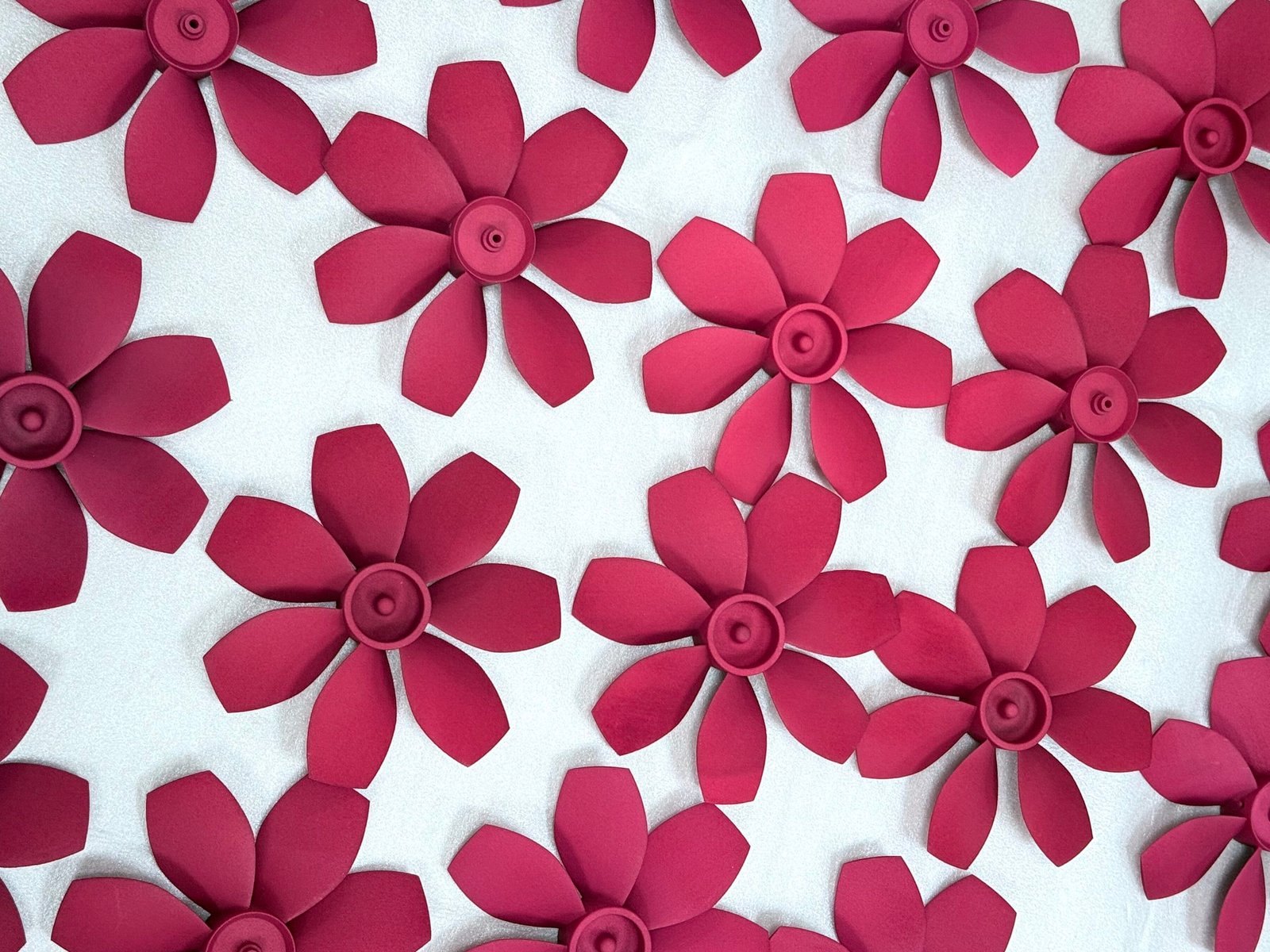
HP’s 3D HR PA 11 Gen2 material for orthopedic 3D printing. Image courtesy of HP.
HP will showcase the new material at the American Orthotic and Prosthetic Association (AOPA) 2025 event (Booth #1231), the leading prosthetics and orthotics trade show. Additionally, HP has partnered with the Limb Kind Foundation. The two conducted a pilot in Kenya where local patients were 3D scanned there, design work was done in the US, sockets were then 3D printed in the US, and then shipped to Kenya. The second phase is currently underway in Sri Lanka. The company says that its approach is faster and delivers lighter prosthetics that are breathable.
Delivering prostheses to children in Kenya. Image courtesy of HP.
“This project showed us what’s possible when compassion meets innovation. With HP’s technology and support, we were able to design and deliver five custom prosthetic devices to children in Kenya. What excites us most is the potential to produce a significantly greater number of prostheses in a much shorter time frame, allowing us to help more children than ever before. It’s more than just speed, it’s about restoring mobility, dignity, and joy.”
A part of the project is local training, which could be good. Generally, local manufacturing would be far superior, of course. Let’s hope that phase three involves local capacity building to work with the people and build devices that meet their actual needs in their local environment.
HP has also been used by the US Department of Veterans Affairs (VA) Puget Sound Health Care System and Radii Devices to make an in-house developed transtibial socket. Done in cooperation with the VA’s X Labs innovation program, the VA is making its very own software workflow, which is an interesting development that would see them potentially save a lot of money. In addition, the VA has made its own post-processing workflow as well. The VA has a note of volume in orthotics and prosthetics. Not only in battlefield trauma, but also veterans with diabetes and other injuries would need orthotics and prosthetics. Rather than just keep things as they were with a lot of manual labor, they’re really innovating here in terms of cost and functionality. The solution is said to be extended to other VA hospitals soon.
Invent medical helmet. Image courtesy of DyeMansion/HP.
HP has also been used by the US Department of Veterans Affairs (VA) Puget Sound Health Care System and Radii Devices to make an in-house developed transtibial socket. Done in cooperation with the VA’s X Labs innovation program, the VA is making its very own software workflow, which is an interesting development that would see them potentially save a lot of money. In addition, the VA has made its own post-processing workflow as well. The VA has a note of volume in orthotics and prosthetics. Not only in battlefield trauma, but also veterans with diabetes and other injuries would need orthotics and prosthetics. Rather than just keep things as they were with a lot of manual labor, they’re really innovating here in terms of cost and functionality. The solution is said to be extended to other VA hospitals soon.
*This article originally appeared on 3DPRNTCOMI Joris Peels is the original author of this piece.
Step into a modern kitchen, open a refrigerator, walk into an office building elevator, or observe medical equipment—in these seemingly different scenarios, one material silently underpins our lives: Stainless Steel 304. As the most common and widely used grade of austenitic stainless steel, SS304 has become an “invisible champion” in industrial manufacturing and daily life, thanks to its excellent corrosion resistance, good formability, and outstanding hygienic properties.
Since stainless steel was invented in the early 20th century, 304 stainless steel has evolved into the world’s most popular stainless steel variety, accounting for approximately 50% of the stainless steel market share. From aerospace to food processing, from architectural decoration to medical devices, this alloy occupies an irreplaceable position in modern materials science due to its unique combination of properties. This article will provide a comprehensive analysis of the chemical composition, mechanical properties, application fields, processing techniques, and selection guidelines for 304 stainless steel, offering a thorough reference for engineers, designers, purchasers, and general consumers.
In the high-stakes world of pediatric cardiology, surgeons often operate with limited information, navigating tiny, complex, and uniquely malformed hearts.