International womens day png background_6002282

3D Printing Advances Drive Prototype-to-Production Shift

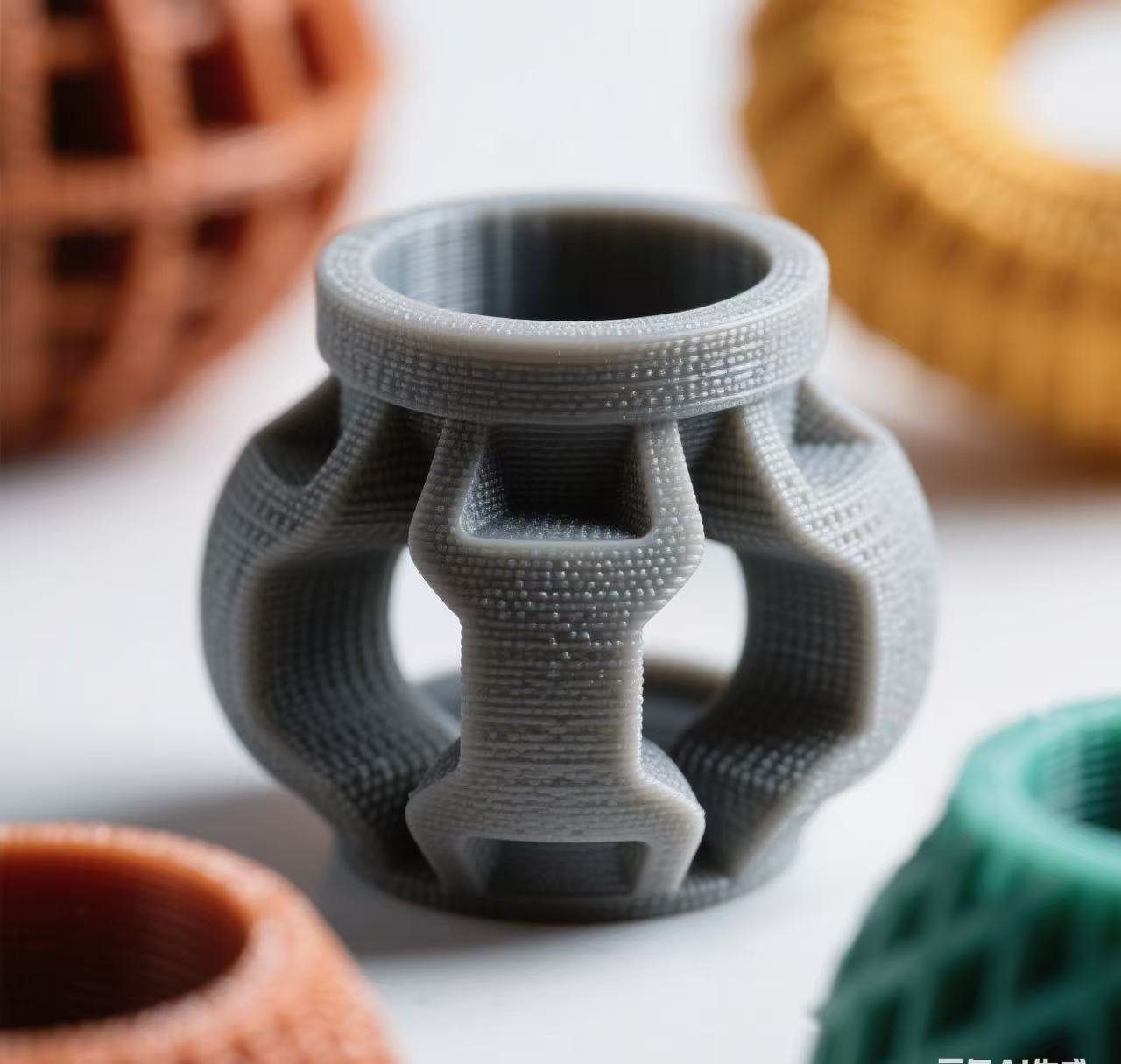
As the manufacturing industry moves toward smarter and more customized production, 3D printing (additive manufacturing) is evolving from a rapid prototyping tool into a mainstream method for producing high-performance end-use components. Recently, leading companies and research institutions have made notable advances in materials, precision, and industrial applications—marking a new chapter in the industrialization of 3D printing.

Material Innovation: Nylon Composites and Metal Powders Lead the Way

Carbon fiber-reinforced nylon (Nylon 12CF) and glass-filled PA materials are now widely used in automotive, UAVs, and medical devices thanks to their superior strength-to-weight ratios. In metal printing, titanium and aluminum powders continue to gain traction due to enhanced part density and forming reliability, particularly in aerospace and power system applications.

Precision Upgrades: 25-Micron Layer Thickness Enables Assembly-Grade Surface Quality

With advancements in SLA and MJF technologies, 3D printers are now capable of achieving layer thicknesses as low as 25 microns. This enables surface finishes comparable to CNC machining without additional post-processing. Functional components like sealing seats and structural connectors can be printed and directly assembled, greatly reducing development timelines.

Application Expansion: Custom Parts, Functional Structures, and Mold Prototypes Gain Momentum

3D printing is increasingly replacing traditional methods in high-demand sectors—from F1 cooling manifolds to personalized medical prosthetics and silicone casting masters in mold making. Experts highlight that 3D printing’s ability to unify design and function is the key to unlocking its full industrial potential.

Sustainable Manufacturing: Less Waste, Lower Carbon Footprint

Compared to subtractive methods, 3D printing reduces material waste by over 90%. On-demand and localized production also cuts logistics and inventory costs, supporting global carbon reduction goals and ESG initiatives.

Have parts to make? Get free instant quote today.

Share the Post:

Related Posts

Knowledge Base
Stainless Steel 304: Comprehensive Analysis of Performance, Applications, and Selection Guide

Step into a modern kitchen, open a refrigerator, walk into an office building elevator, or observe medical equipment—in these seemingly different scenarios, one material silently underpins our lives: Stainless Steel 304. As the most common and widely used grade of austenitic stainless steel, SS304 has become an “invisible champion” in industrial manufacturing and daily life, thanks to its excellent corrosion resistance, good formability, and outstanding hygienic properties.
Since stainless steel was invented in the early 20th century, 304 stainless steel has evolved into the world’s most popular stainless steel variety, accounting for approximately 50% of the stainless steel market share. From aerospace to food processing, from architectural decoration to medical devices, this alloy occupies an irreplaceable position in modern materials science due to its unique combination of properties. This article will provide a comprehensive analysis of the chemical composition, mechanical properties, application fields, processing techniques, and selection guidelines for 304 stainless steel, offering a thorough reference for engineers, designers, purchasers, and general consumers.


Read More

Join our newsletter to stay updated

Scroll to Top