3D Printing Brings Ancient Fossils Back to Life in Türkiye

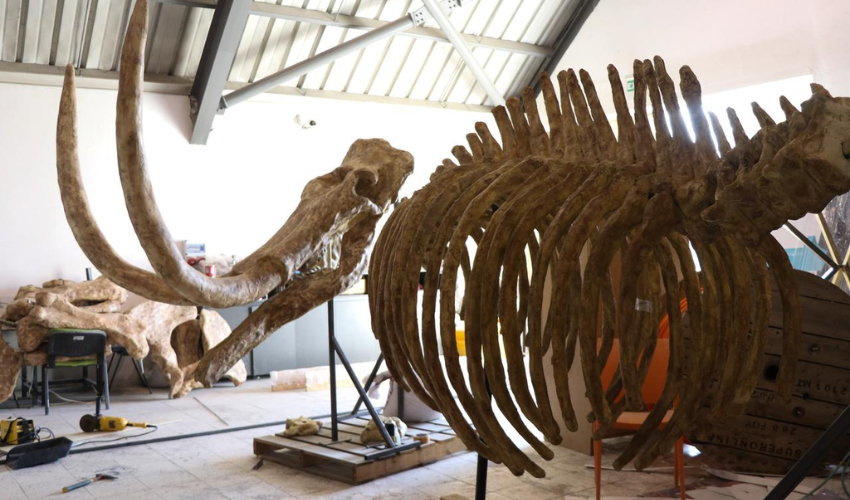
In central Türkiye’s Kayseri province, researchers are turning to 3D printing to help restore fossils that date back 7.7 million years. The remains, discovered near the Yamula Dam by a goat herder in 2017, include saber-toothed cats, giraffes, elephants, mammoths, rhinos, three-toed horses, antelopes, turtles, and pigs. After years of excavation, the fossils are now being cleaned, conserved, and prepared for exhibition at the under-construction Kayseri Paleontology Museum.

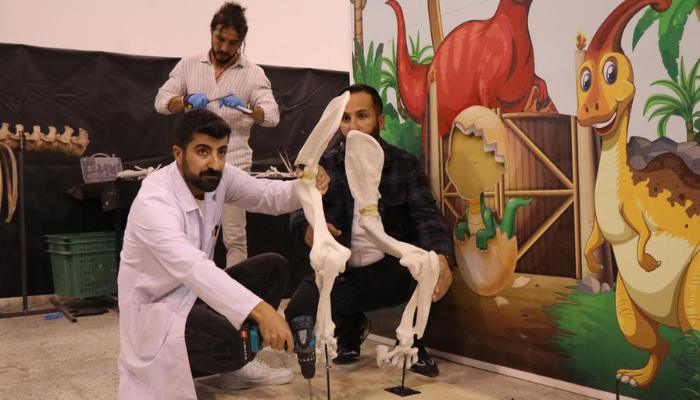
Traditionally, gaps in fossils were filled using chemical molds, a process that was both time-consuming and potentially damaging to the specimens. Now, high-precision 3D scanners and printers allow researchers to digitally replicate missing bones without exposing the fossils to chemicals. After scanning each fragment, the team uses the data to design replacement parts that are then printed locally. This approach not only preserves the integrity of the original material but also significantly speeds up restoration.

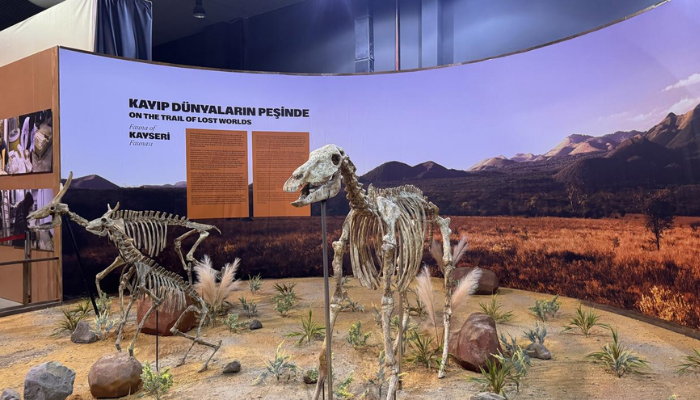
The adoption of 3D printing has brought dramatic cost reductions as well. Mounting a giraffe skeleton previously cost millions of lira and was often outsourced overseas, but with the new technology the team can produce and mount pieces in-house for a fraction of the price. Researchers have already completed full mounts for giraffes, rhinos, and elephants, while a saber-toothed cat mount is nearing completion. Each printed part fits seamlessly with the original fossil, allowing visitors to see complete skeletons for the first time.

The process is guided by careful scientific analysis. After identifying each species, researchers compile measurements from academic literature and create mathematical drawings to inform the design. These models are then uploaded to a slicer software and sent for printing. The printed components are then assembled with the original bones to build full skeletal structures.

Once the museum opens, the reconstructed mounts will take visitors on a journey through Türkiye’s prehistoric landscapes, showcasing the large mammals that once roamed Kayseri. The use of 3D printing is giving new life to ancient remains, blending modern technology with paleontological research to make the distant past accessible in an entirely new way.

*This article originally appeared on 3D PRINTING NEWS.Joseph K is the original author of this piece

Have parts to make? Get free instant quote today.

Share the Post:

Related Posts

Knowledge Base
Protecting mechanical processing parts with “armor”: Comprehensive analysis of galvanizing surface treatment process, advantages and disadvantages, and application selection

Abstract: In the field of mechanical manufacturing, the durability of parts directly determines the lifespan and reliability of the products. Galvanization, as a classic, efficient, and cost-effective metal surface treatment process, provides excellent rust and corrosion protection for steel parts. This article will deeply explore all aspects of galvanizing for mechanical processing parts, including its core principles, detailed comparisons of various processes (electro-galvanizing, hot-dip galvanizing, mechanical galvanizing, etc.), the protective mechanism of the galvanized layer, advantages and disadvantages analysis, subsequent treatments (such as passivation, phosphating), quality inspection standards, and how to select the most suitable galvanizing process based on the characteristics of your parts, helping you equip precision-machined parts with the strongest “armor”.

Read More
Knowledge Base
Complete Guide to Part Polishing: From Process Principles to Application Effects, Comprehensive Analysis of CNC Metal Polishing Technology

In the field of precision manufacturing, part polishing is a crucial step that determines the performance, lifespan, and appearance of products. Whether it is the core components of automotive engines, the precise components of medical devices, or the micro parts of electronic equipment, after professional polishing treatment, not only can the surface smoothness be improved, the friction loss be reduced, but also the corrosion resistance be enhanced, laying a solid foundation for subsequent assembly and use. This article will start from the basic understanding of part polishing, deeply analyze the mainstream polishing processes, material adaptation schemes, common problem solutions, equipment selection techniques, and industry development trends, providing comprehensive and practical reference guidelines for manufacturing enterprises, technicians, and procurement professionals.

Read More

Join our newsletter to stay updated

Scroll to Top