

chinese_new_year_PNG87

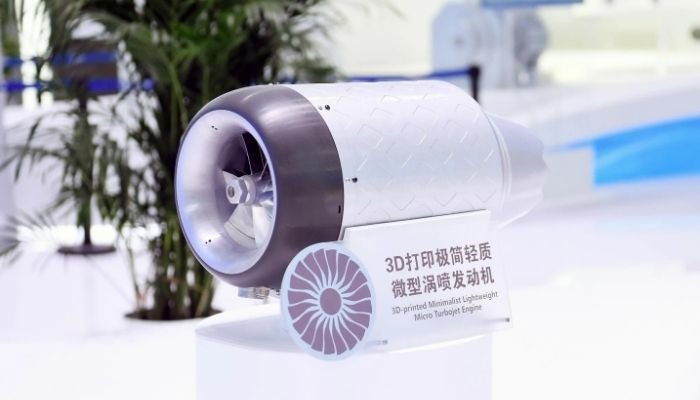
A 3D Printed Micro Turbojet Takes to the Skies in China

The Aero Engine Corporation of China (AECC) has announced the successful maiden flight of its 3D-printed micro turbojet engine, a first for the Chinese aerospace sector. Named Minimalist Lightweight Micro Turbojet, the engine was tested in the Inner Mongolia Autonomous Region in northern China.

AECC Performance Claims

Additive manufacturing is becoming a major asset for the aerospace sector. Its advantages include:

  • Reduced component weight, essential in aerospace;
  • Design of complex geometries, impossible to produce with traditional processes;
  • Shorter production cycles, with finer digital control;
  • Optimization of operating costs through overall weight reduction and functional integration.

International Context and Competition

Similar projects are underway in other countries, notably in the United States, where several initiatives are aimed at integrating 3D printing into rockets, satellites and VTOL aircraft. The market is growing fast, with increasing global competition.

A Strategic Statement from AECC

AECC has not released details of the materials used or the exact process, but the organization claims that this maiden flight:

  • Lays a solid technical foundation for the future development of advanced engines;
  • Confirms the potential of 3D printing for drones, aviation platforms and clean energy systems;
  • Represents a milestone in China’s national aerospace strategy.

*This article originally appeared on 3dnatives . Julia S. is the original author of this piece.

Have parts to make? Get free instant quote today.

Share the Post:

Related Posts

Knowledge Base
Stainless Steel 304: Comprehensive Analysis of Performance, Applications, and Selection Guide

Step into a modern kitchen, open a refrigerator, walk into an office building elevator, or observe medical equipment—in these seemingly different scenarios, one material silently underpins our lives: Stainless Steel 304. As the most common and widely used grade of austenitic stainless steel, SS304 has become an “invisible champion” in industrial manufacturing and daily life, thanks to its excellent corrosion resistance, good formability, and outstanding hygienic properties.
Since stainless steel was invented in the early 20th century, 304 stainless steel has evolved into the world’s most popular stainless steel variety, accounting for approximately 50% of the stainless steel market share. From aerospace to food processing, from architectural decoration to medical devices, this alloy occupies an irreplaceable position in modern materials science due to its unique combination of properties. This article will provide a comprehensive analysis of the chemical composition, mechanical properties, application fields, processing techniques, and selection guidelines for 304 stainless steel, offering a thorough reference for engineers, designers, purchasers, and general consumers.

Read More

Join our newsletter to stay updated

Scroll to Top