🚀 July 11 Update – Batch Edit, Re-Quote, Tiered Pricing & Notifications Are Here
Dear Valued Customer,
We've just released another major update with improvements across the Instant Quote, Cart, Checkout, Dashboard, and Order Management.
As we're continuously shipping new features, there may still be occasional bugs or unexpected issues. If you find anything that doesn't work as expected, please let us know—we truly appreciate your feedback and will fix it as quickly as possible.
🛠 Instant Quote
🏷 Material Tags added to help you choose the most suitable material. 📊 Tiered Pricing is now available. Instantly compare quantity discounts and select the best pricing option. ✏️ Batch Edit for multiple parts. Update configurations or delete multiple parts at once.
🛒 Cart
🔄 Re-Quote any part directly from your cart and continue editing before placing your order. 🛍 Mini Cart added to the header, allowing you to quickly view your cart from any page.
📦 Orders
♻️ Add to Quote and Add All to Quote are now available for existing orders. Reuse previous parts, make changes, and generate a new quote in just one click.
💳 Checkout
🌍 Customs & Shipping Options added.
Choose how you want customs declaration handled. Set your preferred Customs Value. Tell us your Expected Shipping Date.
🔔 Dashboard
🔔 Notifications keep you updated on order status and important activities. 📢 Announcements provide the latest ProtoTi news and product updates.
⚡ Performance & Improvements
We've also fixed and optimized numerous issues across:
Instant Quote
Checkout
Order Details
making the overall experience smoother and more reliable.
💬 Found a bug or have a feature request?
We're releasing new features rapidly, and your feedback helps us improve faster.
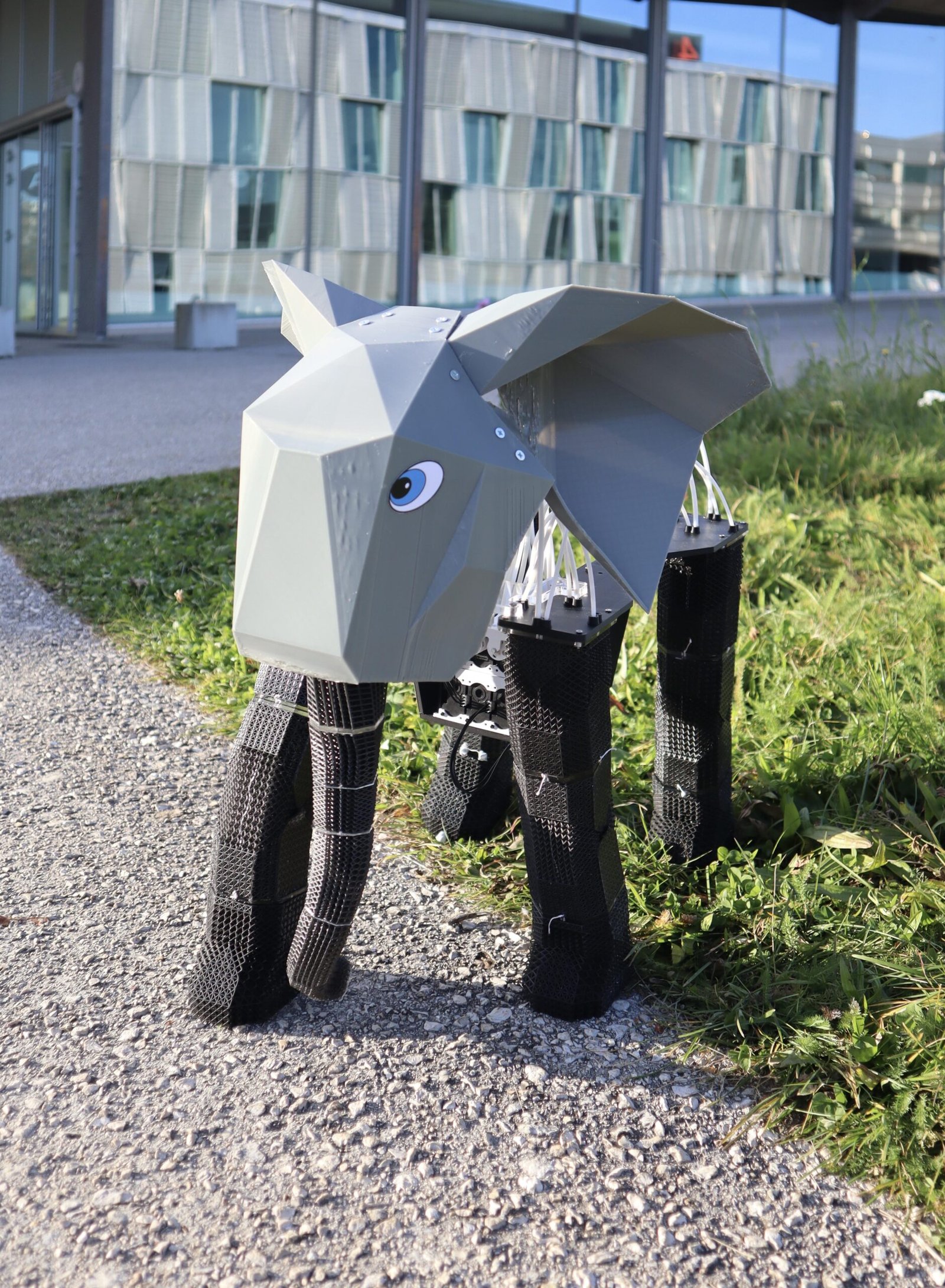
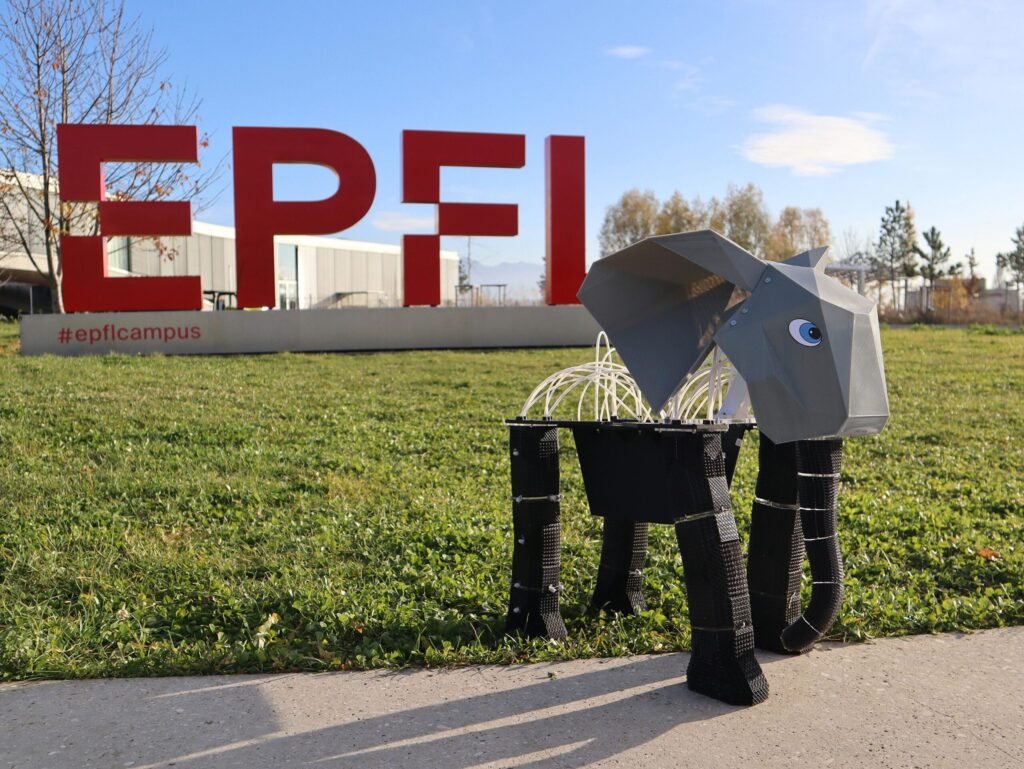
A new elephant-inspired robot can do some of the most surprising tasks, from gently plucking a flower with its trunk to powerfully kicking a bowling ball. It’s all thanks to a groundbreaking design approach inspired by the body of an elephant, which combines strong legs and a soft, flexible trunk, and uses only one type of 3D printed material. What makes this robot special is not what it’s made of, but how it’s designed.
The robot was created by Professor Josie Hughes and her team at the CREATE Lab, part of the Institute of Mechanical Engineering at the École Polytechnique Fédérale de Lausanne (EPFL) in Switzerland. The team also included postdoctoral researchers Qinghua Guan and Hung Hon Cheng, as well as PhD student Benhui Dai.
Instead of using different materials for soft and hard parts, the team found a way to shape the inside of a single material using special internal structures, or lattices. By changing the pattern of these lattices, they can make the material act soft in some areas and stiff in others. This lets them build lifelike machines that can move with strength and flexibility, just like real animals.
Lattices are like miniature building blocks or scaffolds inside a material. By changing the shape and pattern of these blocks, the researchers could control how stiff or soft each part of the robot would be. This new design method gives engineers more control over how a robot moves and feels, without needing different materials or complicated manufacturing.
Elephant robot demonstrates 3D printing technology. Image courtesy of EPFL.
In nature, animals move using muscles, tendons, and bones with different levels of stiffness. For example, an elephant’s trunk is soft and flexible, while its legs are strong and rigid. To replicate this in robotics without making systems overly complex or heavy, researchers developed two key techniques:
Topology Regulation (TR): This method gradually blends two lattice structures to create a smooth transition from soft to stiff materials.
Superposition Programming (SP): By stacking or rotating lattice patterns, this technique allows precise control over stiffness in specific directions.
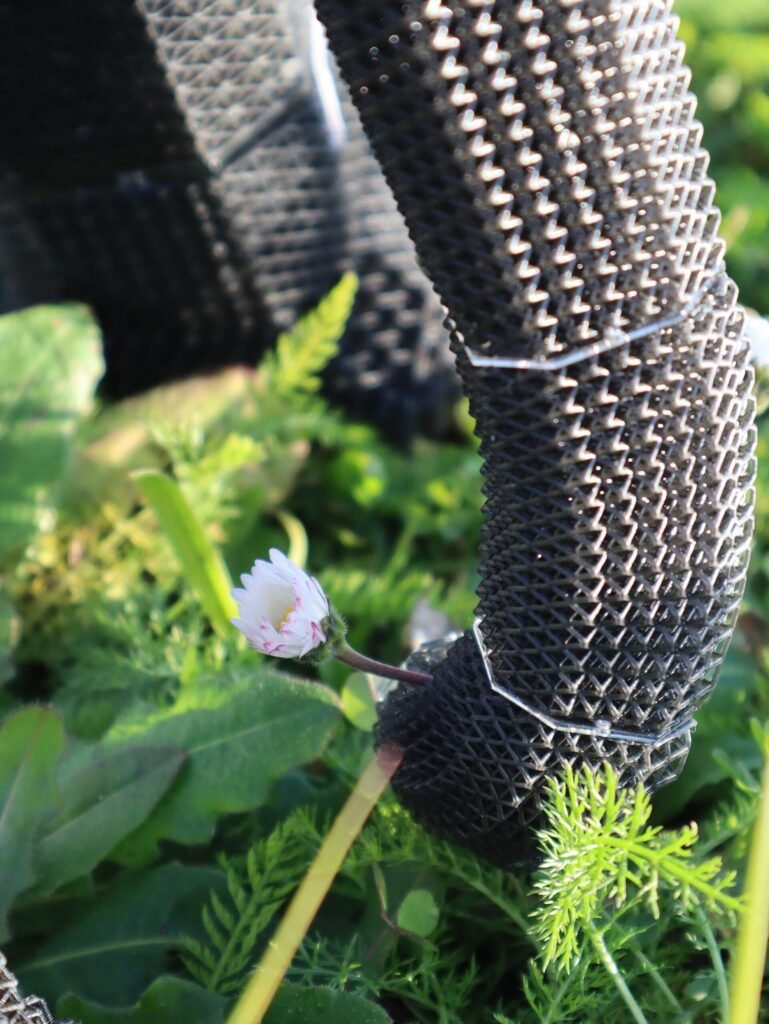
Elephant robot pinches a flower with its robotic trunk. Image courtesy of EPFL.
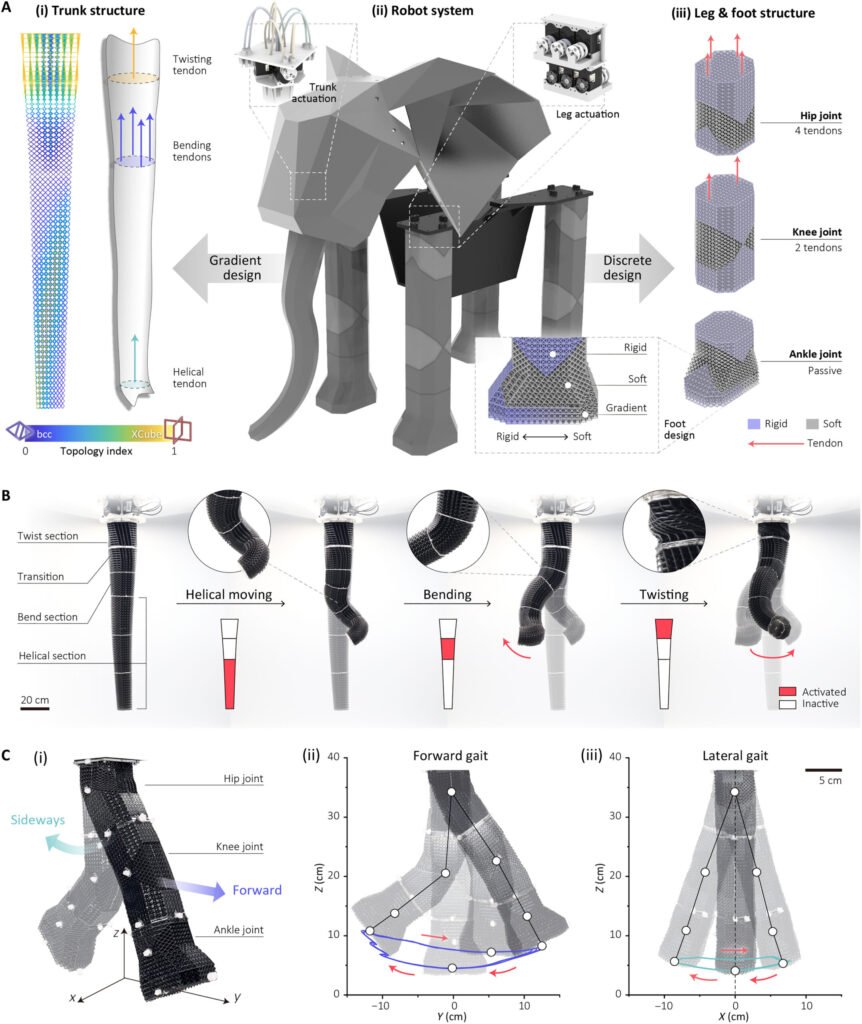
Using these techniques, the team created a robotic elephant with a soft, flexible trunk and strong legs. The trunk is divided into three sections—twisting, bending, and rotating—and operates with only four motors and a few tendons. TR enables the trunk to gently grip objects like a flower without damaging them.
The legs use SP to form strong joints and bones, allowing the robot to walk, balance, and even kick a bowling ball. Different leg areas are designed with varying stiffness to match real elephant anatomy—for example, stiffer toes in the front and softer heels for shock absorption.
The research also demonstrates how programmable lattices can mimic a variety of joint movements, including sliding joints (foot bones), single-axis bending (knee), and dual-axis bending (toes). The trunk’s complex movement is made possible by dividing it into functional sections while maintaining smooth transitions.
Researchers note that this foam lattice design is lightweight, efficient, and ideal for motion in fluid environments. It also opens the door to integrating sensors into the structure, paving the way for more intelligent and adaptable robots.
The elephant robot created by the team uses only a single material, 3D printed with programmable lattices. It moves using motors and tendons, and thanks to its open structure, it’s fast to print, lighter in weight, and even capable of moving in water.
Inspired by how evolution shapes animals—like the flexibility of snakes or the strength of cheetahs—the team believes robots should also be tailored to their tasks. Unlike traditional multi-material approaches, their single-material lattice method simplifies production, lowers cost, and makes customization easier.
Design of the elephant robot. Image courtesy of EPFL.
This technology isn’t just for elephants. It could be used in:
The researchers also see future potential in adding sensors and smart systems into the lattice, making robots that are not only strong and adaptable, but also intelligent.
Their work proves that structure is just as powerful as material—and with the right design, a single substance can unlock a new generation of functional, animal-like robots.
*This article originally appeared on 3DPRINT.COM . Vanesa Listek is the original author of this piece.