International womens day png background_6002282

Greta, A New ESA Rocket Engine, Successfully Completes Testing

Additive manufacturing has established itself as a fundamental technology in rocket development, especially in the production of combustion chambers, as it allows for great freedom in terms of geometry. The most recent example of this application is the Greta engine, a joint development by the European Space Agency (ESA) and ArianeGroup.

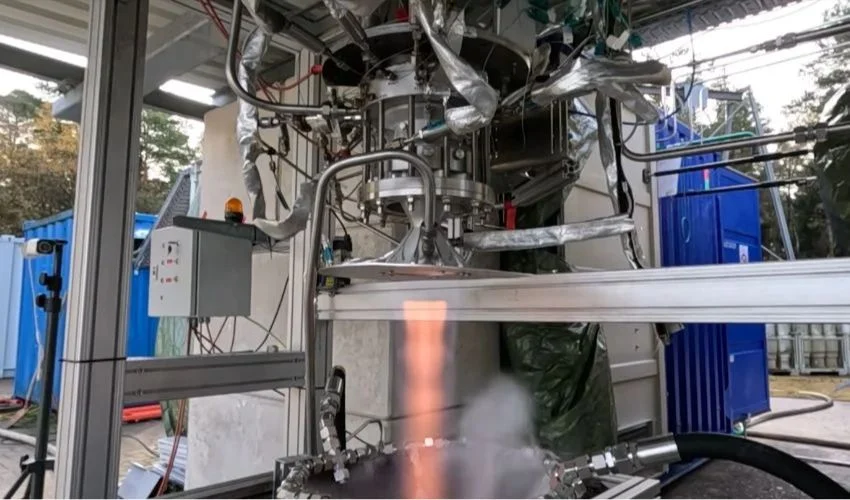
After completing its first test campaign, Greta has demonstrated stable operation during shutdowns and multiple starts. Although manufacturing details are often kept confidential, the ESA has mentioned that “Greta’s 30 cm high combustion chamber was built up in layers by melting metal powders with a laser.” This points to laser powder bed fusion, a technique that ArianeGroup has used in the past.

Greta is a 5 kN engine designed for upper stages such as Astris (Ariane 6) or future lunar landers.

What stands out most about Greta is the architecture of its combustion chamber. It incorporates complex channels built directly into the walls of the structure. These channels allow the coolant to circulate just a few millimeters from the combustion zone, where temperatures exceed 2000°C. Achieving this proximity is an engineering challenge that conventional metallurgy would struggle to solve.

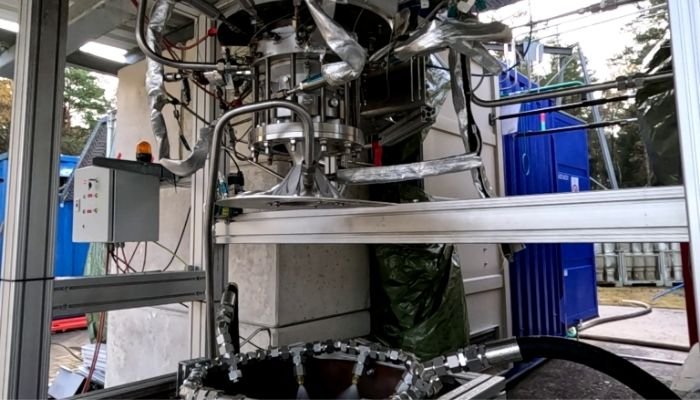
Greta breaks with the dependence on hydrazine (monomethylhydrazine), the propellant traditionally used in this thrust range. Instead, it uses a combination of hydrogen peroxide and ethanol. According to the ESA, this mixture is a more sustainable alternative with a lower carbon footprint. During tests conducted between July and November 2025 in Trauen, Germany, the engine demonstrated complete operational stability, even during continuous firings of more than 40 seconds.

Following its success, the project is entering a new €3 million phase. The aim is to develop the current prototype into a flight engine design. At this stage, European collaboration is intensifying with partners such as Safran Aero Boosters (Belgium), the Aviation Institute (Poland), and InPraise Systems (Czech Republic), who will work on refining the engine’s peripheral components.

*This article originally appeared on 3dnatives. Julia S. is the original author of this piece.

Have parts to make? Get free instant quote today.

Share the Post:

Related Posts

Knowledge Base
17-4 Stainless Steel Comprehensive Guide: In-depth Analysis of Performance, Applications, and Processing Technology

In today’s industrial manufacturing sector, the selection of materials directly determines the performance, lifespan, and cost-effectiveness of the final product. Among numerous high-performance metal materials, 17-4 Stainless Steel (also known as 17-4 PH) has become one of the preferred materials for the aerospace, medical device, petrochemical, and high-end mechanical manufacturing industries due to its unique precipitation hardening characteristics. As a martensitic precipitation hardening stainless steel, 17-4 not only possesses the inherent corrosion resistance of stainless steel but also achieves extremely high strength and hardness through heat treatment. This dual advantage allows it to maintain excellent stability even in extreme environments.

Read More
Knowledge Base
A Comprehensive Guide to Nickel Plating in CNC Machining

In the chain of high-end manufacturing, CNC (Computer Numerical Control) machining is responsible for giving parts their geometric shapes and dimensional accuracy, while surface treatment determines the lifespan, functionality and reliability of the parts. Among various surface treatment processes, nickel plating has become one of the most commonly used post-processing techniques for CNC machined components due to its unique comprehensive properties – combining corrosion resistance, wear resistance, lubricity and excellent appearance.

Whether it is the precision valve bodies in the aerospace field, the aluminum alloy casings in consumer electronics, or the transmission components in the automotive industry, nickel plating plays an indispensable role.

Read More

Join our newsletter to stay updated

滚动至顶部