📦2026 Chinese New Year Holiday & ProtoTi Shipping Schedule
Dear Valued Customer,
Thank you sincerely for your continued trust and support throughout the year 🙏 As the Chinese New Year approaches, order volumes naturally increase as we prepare for the holiday season.
For our team in China, the Chinese New Year is the most important time of the year—a moment after months of hard work to reunite with family and celebrate together 🧧🏮. We truly appreciate your understanding and support during this special period.
To help you plan ahead, please find our shipping arrangements below:
Orders placed before February 1st will be shipped by the cut-off date of February 11th.
Orders placed between February 2nd and February 4th may still be shipped before February 11th, depending on production capacity.
Orders placed on or after February 5th will require extended lead time and will be shipped gradually starting February 24th.
Please note that most manufacturers in China, including ProtoTi, will pause production from February 10th to February 23rd for the Chinese New Year holiday.
If the potential delay does not fit your schedule, please let us know as soon as possible. We will be happy to assist with a refund, provided the order has not yet entered production.
Once again, thank you for your understanding and for being a valued partner of ProtoTi. For any delayed orders, we will proactively provide individual updates with confirmed delivery timelines.
On behalf of the entire ProtoTi Global Business Team, we wish you and your family a joyful, healthy, and prosperous New Year 🎉✨
After roughly a decade of experimentation, additive manufacturing is becoming a major force accelerating the development of In-Space Servicing, Assembly, and Manufacturing (ISAM) and the broader field of In-Space Operations and Manufacturing (ISOM). Insights from NASA’s In-Space Servicing, Assembly, and Manufacturing (ISAM) State of Play 2025 Edition highlight that AM technologies have moved far beyond early experimentation. They are now maturing into essential tools that enable long-duration missions, infrastructure growth, autonomous servicing, and large-scale construction in space.
In-space servicing, assembly, and manufacturing are transforming how we build, maintain, and sustain spacecraft and scientific platforms beyond Earth. Servicing technologies—demonstrated through missions like the Robotic Refueling Mission series, OSAM-1, and robotic systems for geosynchronous satellites—extend spacecraft lifetimes by enabling refueling, repairs, and upgrades, even for satellites not originally designed for such work. These capabilities support long-duration missions, reduce dependence on Earth-based supply chains, and ensure the operability of critical systems across deep-space environments.
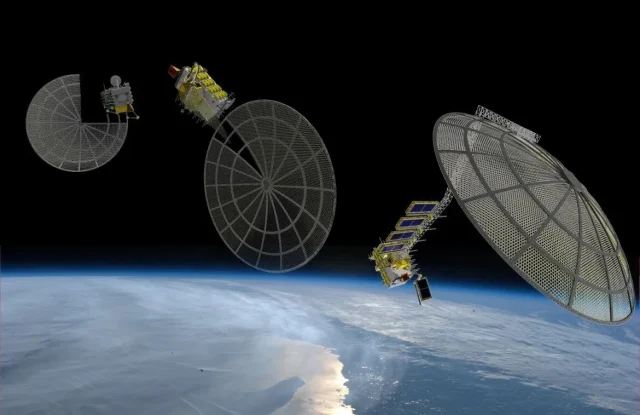
An early concept of the Archinaut system from Made in Space (now Redwire).
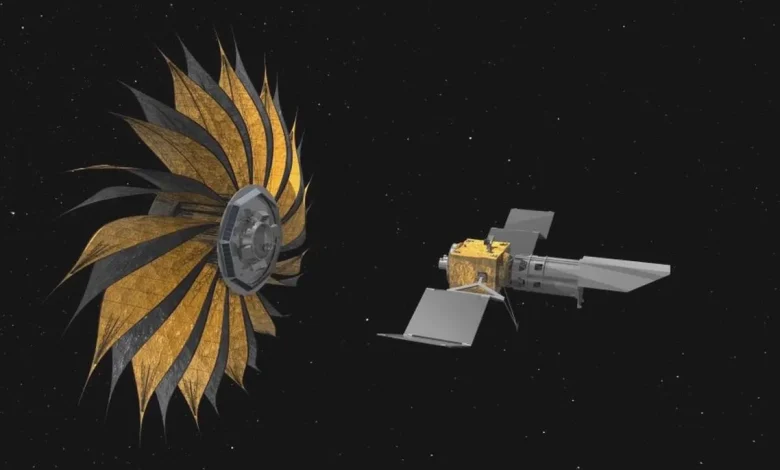
Assembly technologies enable launching large structures as smaller components and robotically piecing them together in orbit, overcoming rocket fairing size limits. This opens the door for constructing ambitious structures like deep-space habitats, starshades, and large telescopes that can’t fit inside a single launch vehicle. Projects such as OSAM-2, ARMADAS, and TALISMAN demonstrate how autonomous and long-reach robotic systems can build and configure complex structures on orbit. These advances enable persistent platforms that can host multiple instruments, reconfigure for new missions, and provide stable observation points without the constraints of crewed stations like the ISS.
Manufacturing in space further expands these capabilities by allowing the creation of components on demand from raw materials, enabling rapid adaptation to unforeseen challenges and reducing the need to launch spare parts. This includes producing large, monolithic structures, applying protective coatings, and fabricating tools directly in orbit. Together, servicing, assembly, and manufacturing form the backbone of sustainable exploration—supporting NASA’s Artemis program, the Gateway lunar station, and future observatories aimed at probing deeper into the universe and possibly detecting life beyond Earth.
AM to build structures in orbit
AM’s role begins with its ability to produce parts and goods directly in orbit. The first 3D printed items in space were produced in 2014 with a Made In Space (now part of Redwire) FDM printer aboard the ISS, proving that plastics can be printed dependably in microgravity. When the Additive Manufacturing Facility arrived in 2016, astronauts gained the capability to create tools and small components on demand. This reduces reliance on Earth-launched spares and enables faster responses to unexpected failures, which is crucial for servicing activities. Later advancements, such as Redwire’s Regolith Print system and the Modular Space Foundry, demonstrate that manufacturing in space is shifting toward metals and even in-situ resources, a trend that directly supports ISAM missions working far from Earth.
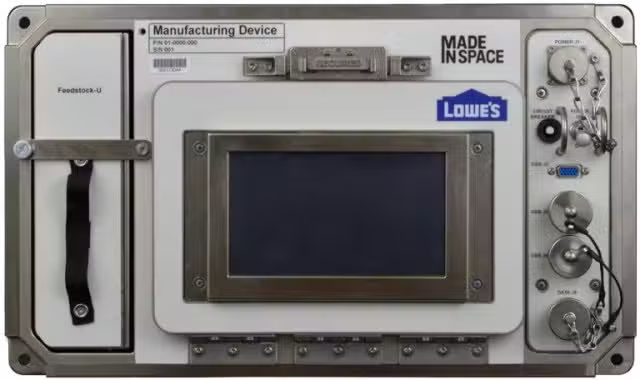
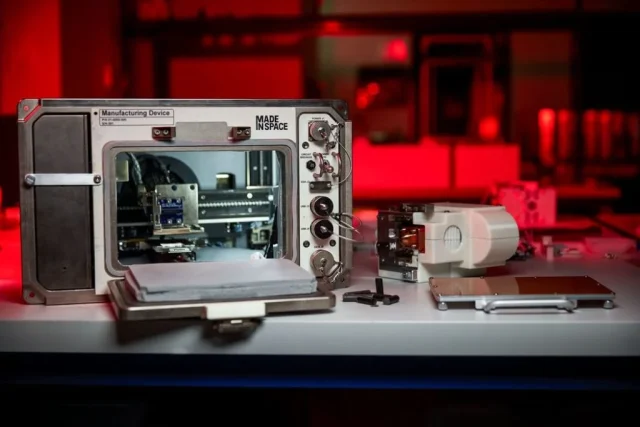
Made In Space’s AMF was the first commercial 3D printer deployed in space
AM is also central to structural manufacturing and assembly, a capability area NASA describes as essential for building components that cannot fit within traditional launch fairings. Instead of launching entire large structures, missions could launch compact raw materials and eventually rely on AM to create trusses, beams, and panels once in orbit. Programs such as DARPA’s NOM4D seek to integrate AM with robotic assembly to build antennas and multi-meter structures in space. NASA’s heritage in welding—including electron-beam welding on Skylab and more recent laser-welding tests in thermal-vacuum environments—adds joining techniques that complement AM-printed structures. This combination allows for the construction of modular, reconfigurable systems that grow and adapt over time.
AM’s impact extends to planetary surface infrastructure as well. NASA notes that transporting building materials from Earth to the Moon or Mars is impractical for long-term habitation, making in-situ resource utilization essential. Technologies like Blue Origin’s Blue Alchemist demonstrate that regolith can be transformed into solar cells and aluminum wiring, and regolith-based printing projects from NASA and Redwire show that local materials can be used to build landing pads, shelters, roads, and habitat components.
Robotic assembly systems such as ARMADAS, the Tall Lunar Tower demonstrations, and GITAI’s lunar construction tests combine robotics with AM-produced materials to autonomously assemble towers, communications systems, or protective structures. These capabilities are foundational for future ISAM and ISOM operations on the Moon and Mars.
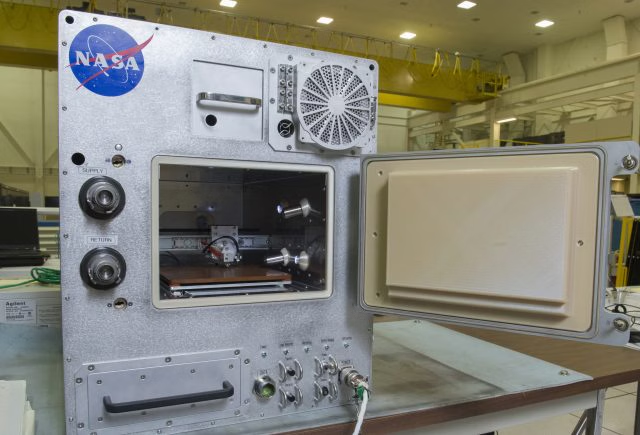
The ReFabricator, installed on the ISS in 2019, was designed to convert used plastic prints back into filament.
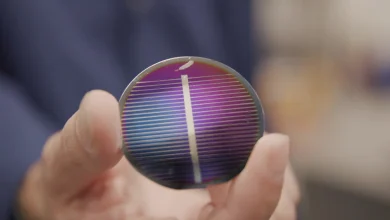
Blue Origin manufactured this working solar cell prototype from lunar regolith simulants.
As AM matures, robots will increasingly be able to print components, assemble them, replace worn parts, and construct large structures with minimal human oversight.
Altogether, additive manufacturing reshapes how ISAM and ISOM missions are conceived. Instead of transporting fully integrated systems, missions can launch raw materials and allow structures, spare parts, and tools to be fabricated on demand. Instead of discarding obsolete satellites, future servicers may recycle them into new feedstock. Instead of constructing lunar infrastructure from Earth-made components, robots will use AM to transform regolith into functional habitat systems. Through each of these changes, AM reduces cost, increases resilience, and expands mission possibilities, making sustained human and robotic presence in space achievable in ways that were not possible with conventional manufacturing approaches.
*This article originally appeared onVoxelMatters . Davide Sher is the original author of this piece.
Step into a modern kitchen, open a refrigerator, walk into an office building elevator, or observe medical equipment—in these seemingly different scenarios, one material silently underpins our lives: Stainless Steel 304. As the most common and widely used grade of austenitic stainless steel, SS304 has become an “invisible champion” in industrial manufacturing and daily life, thanks to its excellent corrosion resistance, good formability, and outstanding hygienic properties.
Since stainless steel was invented in the early 20th century, 304 stainless steel has evolved into the world’s most popular stainless steel variety, accounting for approximately 50% of the stainless steel market share. From aerospace to food processing, from architectural decoration to medical devices, this alloy occupies an irreplaceable position in modern materials science due to its unique combination of properties. This article will provide a comprehensive analysis of the chemical composition, mechanical properties, application fields, processing techniques, and selection guidelines for 304 stainless steel, offering a thorough reference for engineers, designers, purchasers, and general consumers.
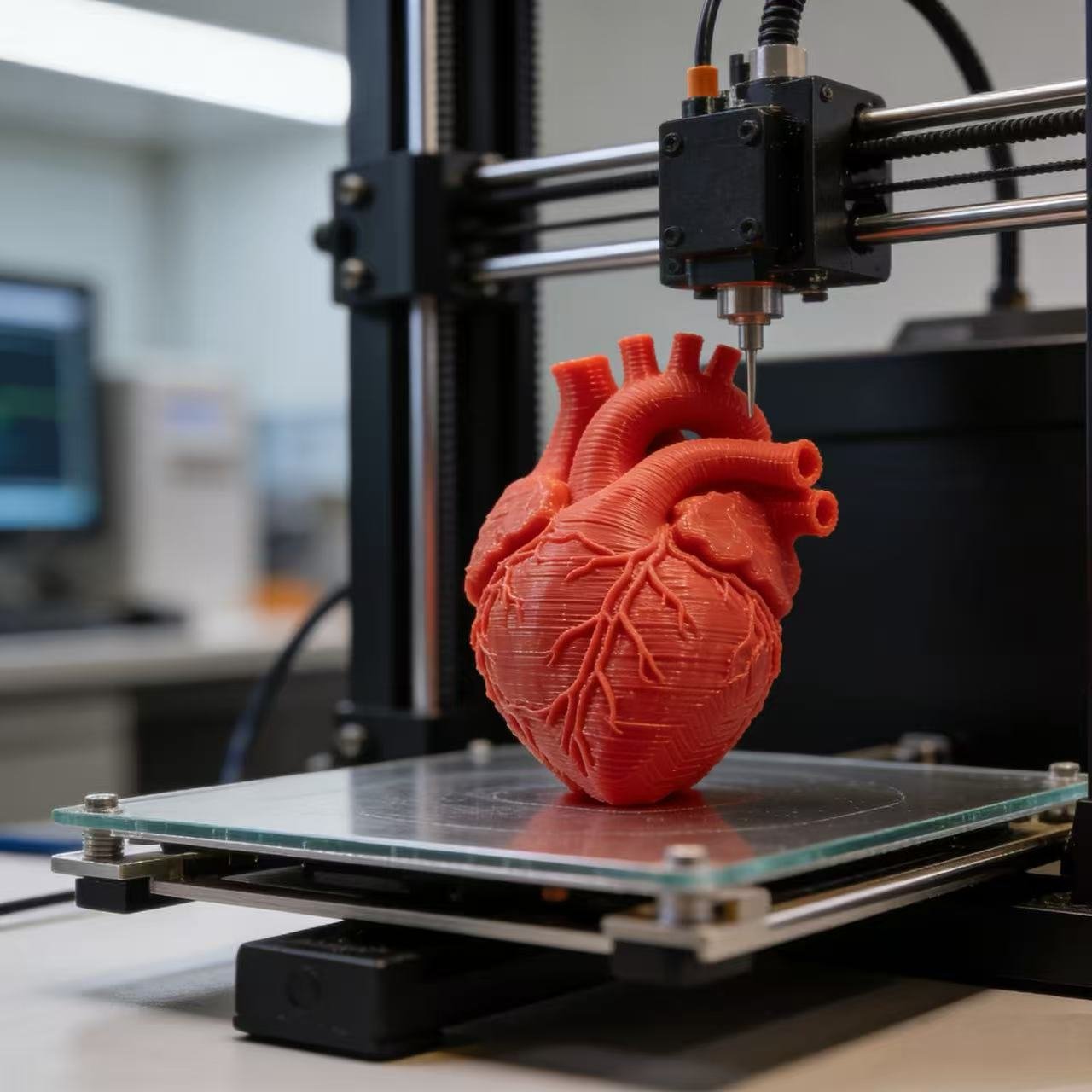
In the high-stakes world of pediatric cardiology, surgeons often operate with limited information, navigating tiny, complex, and uniquely malformed hearts.