
International womens day png background_6002282

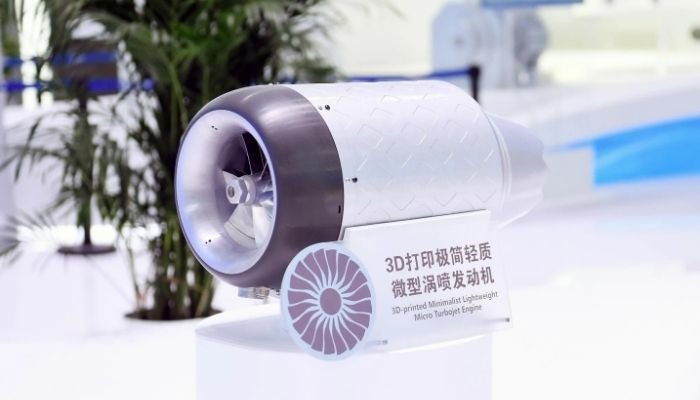
A 3D Printed Micro Turbojet Takes to the Skies in China

The Aero Engine Corporation of China (AECC) has announced the successful maiden flight of its 3D-printed micro turbojet engine, a first for the Chinese aerospace sector. Named Minimalist Lightweight Micro Turbojet, the engine was tested in the Inner Mongolia Autonomous Region in northern China.

AECC Performance Claims

Additive manufacturing is becoming a major asset for the aerospace sector. Its advantages include:

  • Reduced component weight, essential in aerospace;
  • Design of complex geometries, impossible to produce with traditional processes;
  • Shorter production cycles, with finer digital control;
  • Optimization of operating costs through overall weight reduction and functional integration.

International Context and Competition

Similar projects are underway in other countries, notably in the United States, where several initiatives are aimed at integrating 3D printing into rockets, satellites and VTOL aircraft. The market is growing fast, with increasing global competition.

A Strategic Statement from AECC

AECC has not released details of the materials used or the exact process, but the organization claims that this maiden flight:

  • Lays a solid technical foundation for the future development of advanced engines;
  • Confirms the potential of 3D printing for drones, aviation platforms and clean energy systems;
  • Represents a milestone in China’s national aerospace strategy.

*This article originally appeared on 3dnatives . Julia S. is the original author of this piece.

Have parts to make? Get free instant quote today.

Share the Post:

Related Posts

Knowledge Base
A Comprehensive Guide to Nickel Plating in CNC Machining

In the chain of high-end manufacturing, CNC (Computer Numerical Control) machining is responsible for giving parts their geometric shapes and dimensional accuracy, while surface treatment determines the lifespan, functionality and reliability of the parts. Among various surface treatment processes, nickel plating has become one of the most commonly used post-processing techniques for CNC machined components due to its unique comprehensive properties – combining corrosion resistance, wear resistance, lubricity and excellent appearance.

Whether it is the precision valve bodies in the aerospace field, the aluminum alloy casings in consumer electronics, or the transmission components in the automotive industry, nickel plating plays an indispensable role.

Read More

Join our newsletter to stay updated

滚动至顶部