International womens day png background_6002282

D.E.E.P consortium to explore additive manufacture of digitally-enabled marine propeller

A UK-based consortium is to explore the additive manufacture of a digitally-enabled propeller after securing funding from Innovate UK through the Clean Maritime Demonstration Competition (CMDC6).

The group, operating under the Digitally Enabled Efficient Propeller (D.E.E.P) moniker, will now launch a Techno-Economic Feasibility Study of Manufacturing Digitally Enabled Efficient Propellers. D.E.E.P will seek to pioneer a new generation of marine propellers produced using advanced additive manufacturing (AM) processes, integrated with digital twin technology. 

Harnessing AM, the participants believe they will transform ropellers from passive hardware into smart, cyber-physical systems capable of monitoring their performance throughout their operational life.

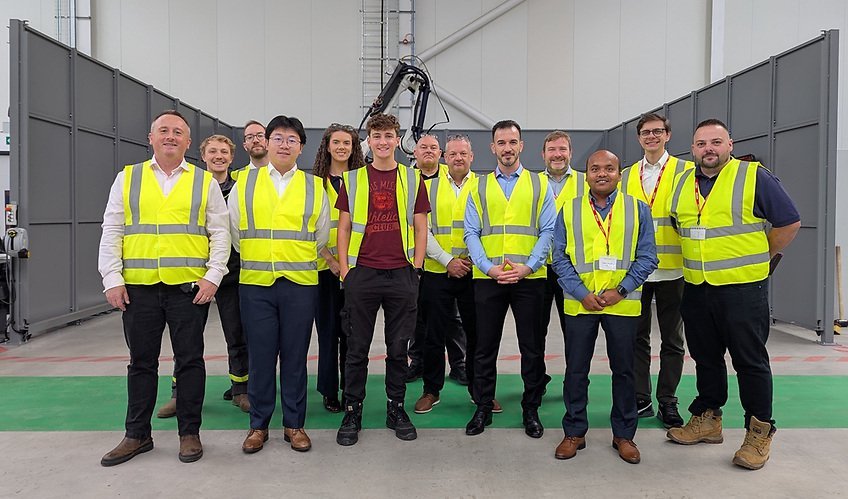
Enki Marine Ltd will lead the consortium, with Stone Marine Propulsion (design and market validation), TWI (materials testing and manufacturing processes), DEEP Manufacturing Ltd (manufacturing processes and production scaling), Authentise (digital thread and AI-driven monitoring), ASTM International (standardisation and certification), and Newcastle University (hydrodynamic modelling and validation) all joining the effort. 

The project will investigate the technology readiness of multiple AM processes for the maritime sector, benchmark their performance against conventional casting methods, and establish a clear pathway towards classification approval and type certification. This approach, the consortium says, will ensure that the project not only delivers technical innovation but also creates a credible framework for industrial adoption and regulatory compliance.

Milad Armin, Executive Director of Enki Marine, said: “ENKI’s core mission is to ensure that emerging technologies are not only cutting-edge, but also safe, purpose-driven, and seamlessly integrated into the maritime sector. We are proud to collaborate with a world-leading consortium on the D.E.E.P programme, which supports our mission and will pioneer a new generation of marine propellers manufactured through advanced additive manufacturing (AM) processes and enhanced with digital twin technology.”

*This article originally appeared on TCT Magazine.Sam Davies is the original author of this piece.

Have parts to make? Get free instant quote today.

Share the Post:

Related Posts

Knowledge Base
Ultimate Guide: In-depth Analysis of 316 Stainless Steel (Properties, Processing, and Application Trends)

In the grand narrative of modern industrial civilization, every minor advancement in materials science often leads to a significant leap in human productivity. Among various metal materials, stainless steel undoubtedly ranks as one of the most revolutionary inventions. It not only transformed the appearance of buildings, redefined safety standards in healthcare, but also became the cornerstone in key fields such as chemical engineering, marine, and energy. Within the vast family of stainless steel, 316 stainless steel (and its low-carbon variant 316L) is hailed as the “industrial gold” due to its outstanding comprehensive performance, and is the preferred material in highly corrosive environments.

Read More
Industry News
New Aibuild OS automates engineering lifecycle from CAD to CAM

UK-based AM software company Aibuild has introduced Aibuild OS, an advanced AI-based operating system that automates the engineering lifecycle, from CAD to CAM. The OS uses agentic AI to deliver a highly autonomous program that can operate independent of human supervision and help to increase productivity and efficiency for part production.

Read More

Join our newsletter to stay updated

Scroll to Top