International womens day png background_6002282

ORNL Develops New Crack-Resistant Aluminum Alloy for High-Temperature 3D Printing

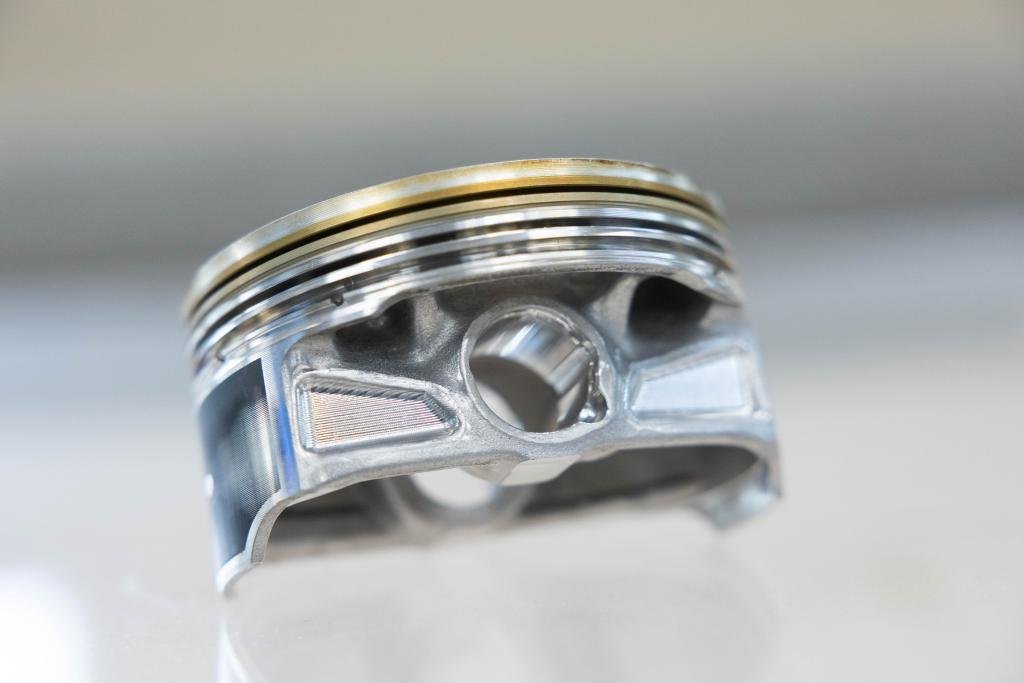
OAK RIDGE, Tenn. — Researchers at the U.S. Department of Energy’s Oak Ridge National Laboratory (ORNL) have successfully tested a new aluminum alloy, DuAlumin-3D, specifically engineered for additive manufacturing. The material demonstrates exceptional potential for producing high-temperature automotive components, overcoming a significant barrier in the 3D printing of lightweight metals.

The study highlights that DuAlumin-3D exhibits superior printability compared to conventional aluminum alloys, which are often prone to cracking during the laser powder bed fusion (LPBF) process. Crucially, it maintains thermal properties on par with existing materials, making it a viable candidate for applications where heat resistance and weight reduction are critical.

“DuAlumin-3D performed well in our evaluations, showing excellent resistance to hot cracking,” said ORNL lead researcher Alex Plotkowski. “While our initial focus is on high-efficiency engines, this alloy could readily be applied in aerospace or to innovate heat exchanger designs.”

Why It Matters: The development of an aluminum alloy that is both easy to 3D print and resistant to high temperatures could accelerate the adoption of additive manufacturing for critical components in cars and aircraft. This translates into more efficient engines, improved fuel economy, and greater design flexibility for industries where every gram and every degree Celsius counts.

A Global Push for Advanced Aluminum AM

This breakthrough at ORNL is part of a broader, international effort to advance aluminum additive manufacturing technologies:

  • U.S. Defense Initiative: In May, Japan’s Nikon Corporation entered a $2.1 million agreement with the National Center for Defense Manufacturing and Machining (NCDMM) to advance metal AM for defense and aerospace. The program, funded by the Office of the Under Secretary of Defense, focuses on qualifying Constellium’s Aheadd CP1 aluminum alloy and involves industry partners including Lockheed Martin, Northrop Grumman, and RTX.
  • Australian-US Navy Collaboration: Australian manufacturer AML3D extended a $370,000 AUD contract with BlueForge Alliance to test its Nickel-Aluminium-Bronze (NAB) alloys for the US Navy’s submarine program. As part of its US expansion strategy, AML3D has also installed a large-scale ARCEMY 3D printing system at Oak Ridge National Laboratory.
  • UK R&D Partnership: Aluminium Materials Technologies (AMT) is collaborating with the University of Birmingham to deepen the metallurgical understanding of its A20X aluminum alloy when processed via LPBF and DED. The high-strength A20X is already widely used in aerospace and motorsports.

These concurrent developments underscore a global race to qualify and deploy next-generation aluminum alloys that can unlock the full potential of 3D printing for high-performance applications.

Have parts to make? Get free instant quote today.

Share the Post:

Related Posts

Knowledge Base
Stainless Steel 304: Comprehensive Analysis of Performance, Applications, and Selection Guide

Step into a modern kitchen, open a refrigerator, walk into an office building elevator, or observe medical equipment—in these seemingly different scenarios, one material silently underpins our lives: Stainless Steel 304. As the most common and widely used grade of austenitic stainless steel, SS304 has become an “invisible champion” in industrial manufacturing and daily life, thanks to its excellent corrosion resistance, good formability, and outstanding hygienic properties.
Since stainless steel was invented in the early 20th century, 304 stainless steel has evolved into the world’s most popular stainless steel variety, accounting for approximately 50% of the stainless steel market share. From aerospace to food processing, from architectural decoration to medical devices, this alloy occupies an irreplaceable position in modern materials science due to its unique combination of properties. This article will provide a comprehensive analysis of the chemical composition, mechanical properties, application fields, processing techniques, and selection guidelines for 304 stainless steel, offering a thorough reference for engineers, designers, purchasers, and general consumers.

Read More

Join our newsletter to stay updated

Scroll to Top