🚀 July 11 Update – Batch Edit, Re-Quote, Tiered Pricing & Notifications Are Here
Dear Valued Customer,
We've just released another major update with improvements across the Instant Quote, Cart, Checkout, Dashboard, and Order Management.
As we're continuously shipping new features, there may still be occasional bugs or unexpected issues. If you find anything that doesn't work as expected, please let us know—we truly appreciate your feedback and will fix it as quickly as possible.
🛠 Instant Quote
🏷 Material Tags added to help you choose the most suitable material. 📊 Tiered Pricing is now available. Instantly compare quantity discounts and select the best pricing option. ✏️ Batch Edit for multiple parts. Update configurations or delete multiple parts at once.
🛒 Cart
🔄 Re-Quote any part directly from your cart and continue editing before placing your order. 🛍 Mini Cart added to the header, allowing you to quickly view your cart from any page.
📦 Orders
♻️ Add to Quote and Add All to Quote are now available for existing orders. Reuse previous parts, make changes, and generate a new quote in just one click.
💳 Checkout
🌍 Customs & Shipping Options added.
Choose how you want customs declaration handled. Set your preferred Customs Value. Tell us your Expected Shipping Date.
🔔 Dashboard
🔔 Notifications keep you updated on order status and important activities. 📢 Announcements provide the latest ProtoTi news and product updates.
⚡ Performance & Improvements
We've also fixed and optimized numerous issues across:
Instant Quote
Checkout
Order Details
making the overall experience smoother and more reliable.
💬 Found a bug or have a feature request?
We're releasing new features rapidly, and your feedback helps us improve faster.
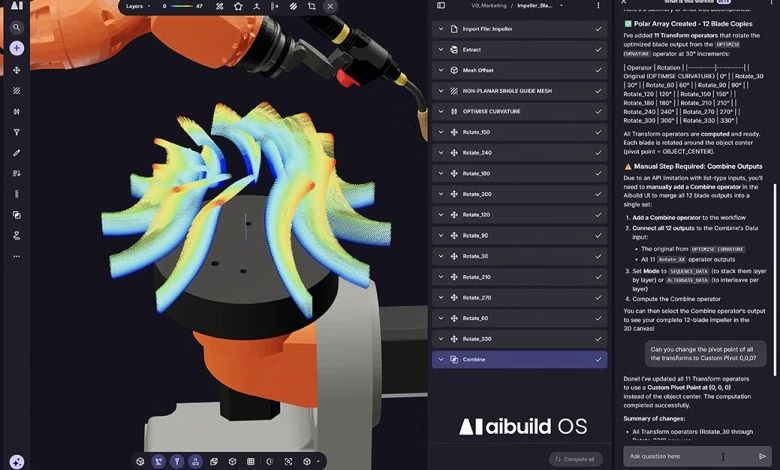
UK-based AM software company Aibuild has introduced Aibuild OS, an advanced AI-based operating system that automates the engineering lifecycle, from CAD to CAM. The OS uses agentic AI to deliver a highly autonomous program that can operate independent of human supervision and help to increase productivity and efficiency for part production.
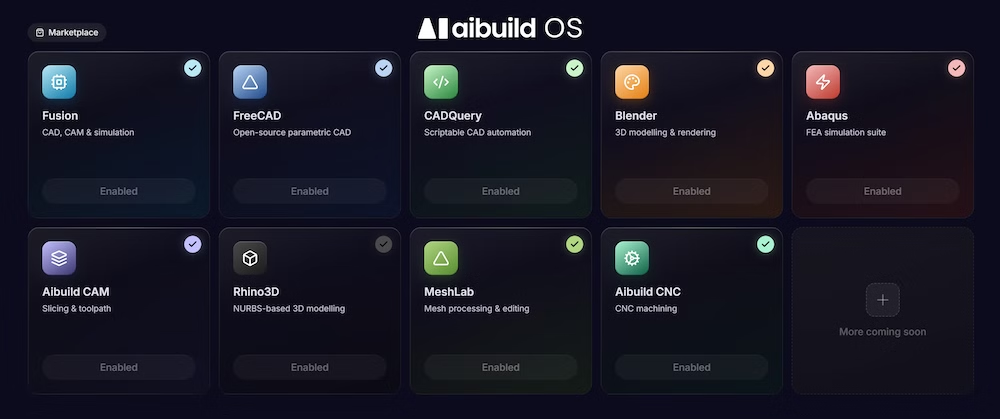
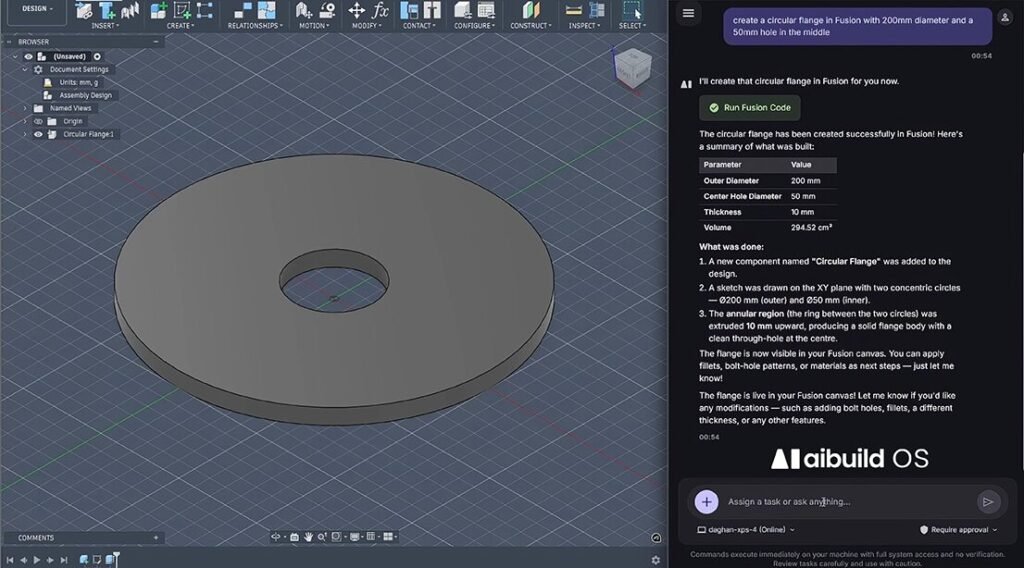
Often when we talk about AI-driven technologies, we are talking about assistive tools that streamline tasks for people but still require a relatively high level of oversight and input. With its new operating system, however, Aibuild is clear to differentiate its agentic AI approach, which effectively functions as a “digital engineer”. That is, Aibuild OS integrates with existing tech stacks and workflows, executing tasks—from CAD, to CAE, to CAM—that would previously have been done manually. According to Aibuild, all the OS needs is an initial plain language prompt about what needs to be built, and the AI will plan and execute each subsequent step.
As Daghan Cam, co-founder and CEO of Aibuild, summed it up: “For too long, engineering capacity has been limited by human execution bandwidth. We are removing these barriers. By allowing engineers to deploy autonomous AI directly into their workflows, we help teams solve complex production challenges, reduce lead times, and increase productivity.”
Aibuild OS is built on the company’s extensive experience with computer-aided manufacturing (CAM) software—notably, its Aibuild CAM solution is used by automotive and aerospace leaders like Ford and Boeing. With the newly launched Aibuild OS, the company is providing a horizontal platform that integrates AI throughout the entire engineering workflow and enables engineers to easily transform design intent into finished parts.
Among the specific capabilities of Aibuild OS are design generation (i.e. turning plain language into digital models or 2D images into 3D models); data repair and processing (i.e. cleaning meshes and ensuring 3D models are manufacturable); surface preparation (i.e. closing holes and preparing surfaces for CNC milling); rapid tooling design (i.e. generating jigs, fixtures, or molds optimized for manufacturability); and toolpath generation (i.e. turning the CAD model into G-code for additive manufacturing).
By integrating and automating these various steps in the AM engineering workflow, Aibuild OS is expected users to save as many as 19 hours of work per part. Michail Desyllas, co-founder and COO of Aibuild, explains: “Traditional manufacturing software creates silos. Engineers spend hours moving data between disconnected tools and manually translating outputs. Aibuild OS orchestrates these processes as a single intelligent system. It is the operating system layer that manufacturing has lacked until now.”
This, as Aibuild emphasizes, should free up significant time for engineers, who can dedicate their skills to other high-value tasks, as well as enable manufacturers to scale engineering capacity without growing their team. Interested organizations can now access the company’s new Aibuild OS, which is now live in Public Alpha. The operating system’s development has been supported by investments from 212 NexT, Driventure, ACT Venture Partners, Force Over Mass Capital, and Atlas Ventures.
*This article originally appeared on VoxelMatters. Tess Boissonneault is the original author of this piece