

chinese_new_year_PNG87

First Metal 3D Printed Parts in Space Open New Possibilities for Long-Duration Missions

3d printing metal parts in space
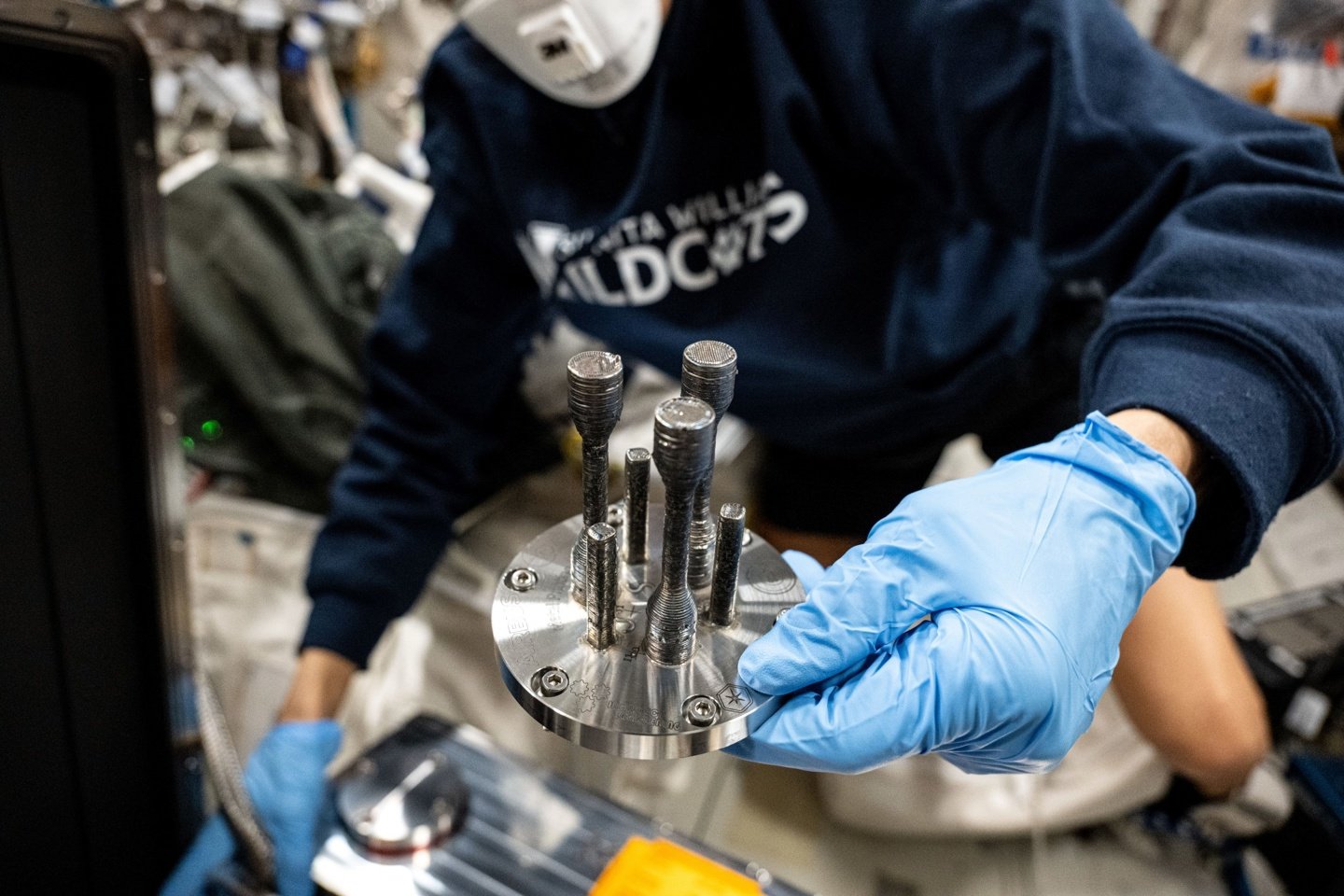
On August 6, the European Space Agency (ESA) announced a significant milestone: the successful 3D printing of metal components in the microgravity environment of the International Space Station (ISS). This achievement is set to enhance equipment customization for future Earth-Moon and Earth-Mars missions. While plastic 3D printers have been used in space before, metal offers superior properties and a broader range of applications.

According to a press release from the European Space Agency (ESA) on August 6, 2024, the metal 3D printer aboard the International Space Station has achieved a historic first by printing metal components in space. This accomplishment marks a significant advancement in the ability to manufacture parts in microgravity, offering promising new capabilities for long-duration space missions to the Moon and Mars.

Previously, plastic 3D printers have been utilized on the ISS, but metal printing introduces numerous advantages over plastic materials. Metal parts can offer greater strength, durability, and a wider array of applications, making them essential for complex space missions.

The metal 3D printer, launched on January 30, 2024, aboard the NG-20 “Cygnus” cargo spacecraft via a SpaceX Falcon 9 rocket, was installed in the Columbus module of the ISS. Following its arrival in space, the printer began a series of tests. The first successful print, which occurred on May 30, 2024, was an S-shaped test piece.

3d printing in space

In addition to the August successful prints, the metal 3D printer is expected to produce a total of four research components. Two of these will be returned to Earth and sent to ESA’s ESTEC Technical Centre in the Netherlands. Another component will be used in ESA’s LUNA lunar simulation facility at the astronaut training center in Cologne, Germany, while the final piece will be transported to the Technical University of Denmark.

As missions venture further from Earth, the challenge of resupplying spacecraft becomes increasingly complex. 3D printing technology offers a solution by enabling on-demand production of necessary parts or replacements for faulty components, reducing reliance on redundant supplies and resupply missions. This advancement not only supports long-term space exploration but also underscores the growing importance of in-space manufacturing capabilities.

Share the Post:

Related Posts

Knowledge Base
Stainless Steel 304: Comprehensive Analysis of Performance, Applications, and Selection Guide

Step into a modern kitchen, open a refrigerator, walk into an office building elevator, or observe medical equipment—in these seemingly different scenarios, one material silently underpins our lives: Stainless Steel 304. As the most common and widely used grade of austenitic stainless steel, SS304 has become an “invisible champion” in industrial manufacturing and daily life, thanks to its excellent corrosion resistance, good formability, and outstanding hygienic properties.
Since stainless steel was invented in the early 20th century, 304 stainless steel has evolved into the world’s most popular stainless steel variety, accounting for approximately 50% of the stainless steel market share. From aerospace to food processing, from architectural decoration to medical devices, this alloy occupies an irreplaceable position in modern materials science due to its unique combination of properties. This article will provide a comprehensive analysis of the chemical composition, mechanical properties, application fields, processing techniques, and selection guidelines for 304 stainless steel, offering a thorough reference for engineers, designers, purchasers, and general consumers.

Read More

Join our newsletter to stay updated

Scroll to Top